
The clip warned of a potential side effect of smoking cannabis in the long term
A simulation has shown how cannabis interacts with the brain to give the feeling of being high, as well as its potential side effects.
Cannabis is linked with several dangerous side effects if used regularly, including serious conditions such as psychosis, as well as increasing the risk of mental health conditions like depression and anxiety.
Using cannabis here and there is not considered as dangerous as other illegal drugs, of course, such as cocaine or ecstasy, where the added risk of it being cut with other substances is also present.
But regular use of cannabis can lead to people developing health conditions over time – including a troubling new side effect that has recently been warned about.
This is called cannabis hyperemesis syndrome (CHS), and can result in symptoms like nausea.

Some strains of cannabis are much stronger than others, and smoking it can cause many health issues in the long term (Martin Deja/Getty)
Emergency medicine specialist, Dr. Chris Buresh, said: “Some people say they’ve used cannabis without a problem for decades. Or they smoke pot because they think it treats their nausea.
“It seems like there’s a threshold when people can become vulnerable to this condition, and that threshold is different for everyone.
“Even using in small amounts can make these people start throwing up.”
Now, a video posted to YouTube by Carleton University has explained how the way that cannabis interacts with the brain is a part of how it can cause these medical problems – in particular, the mental health side effects.
The clip explained that it’s all to do with the endocannabinoid system (try saying that fast five times), and the active chemicals in cannabis that interfere with this part of the brain.
Our endocannabinoid system is a part of the brain that helps with things like mood, memory, and stress.
So it’s probably no surprise that prolonged use of cannabis can lead to things like panic attacks, depression, and memory problems.
The endocannabinoid system functions with a set of ‘main signalling molecules’, which are actually called endocannabinoids, which bind onto special receptors in the brain.
Our bodies actually produce our own endocannabinoids.
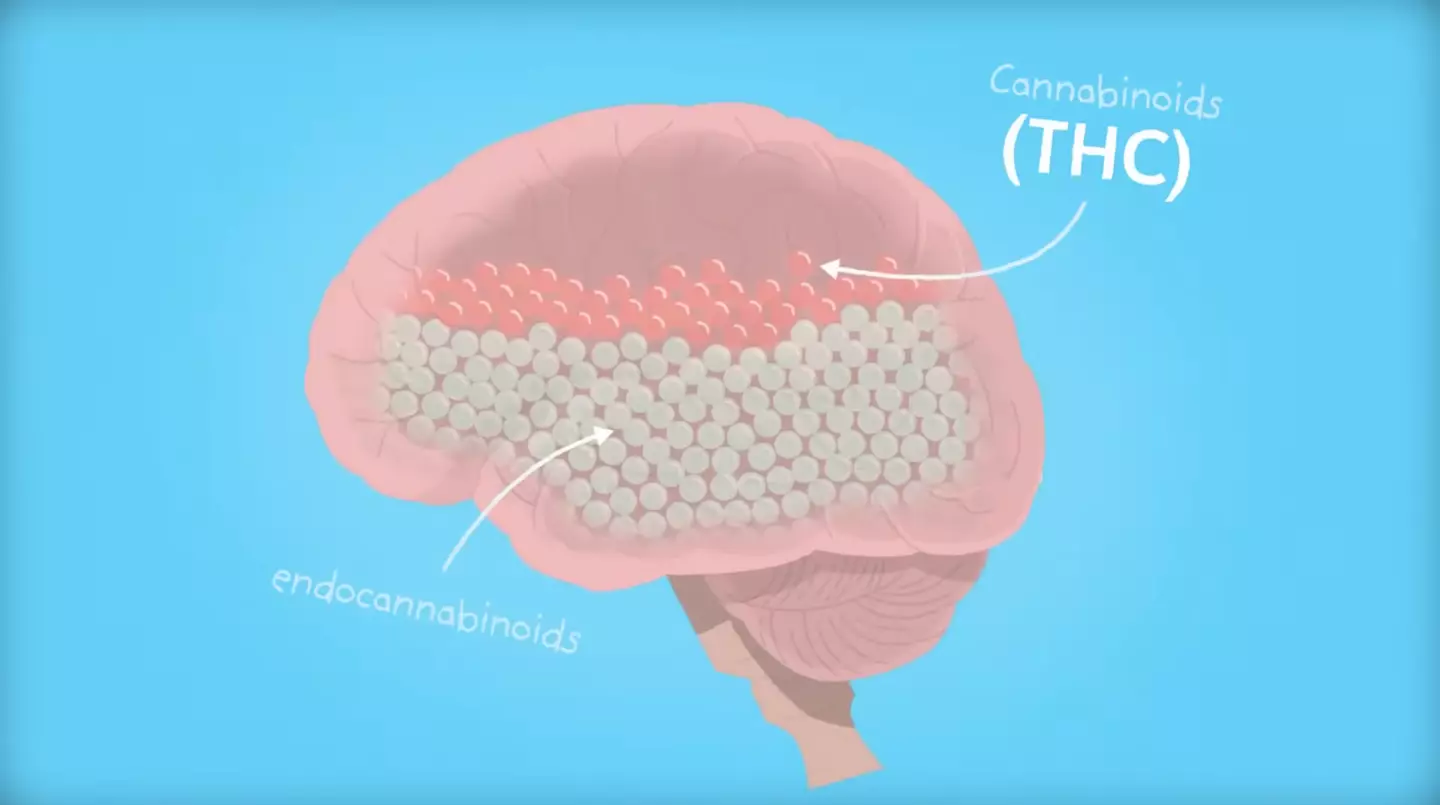
The clip illustrated how cannabis use can affect the brain (YouTube/Carleton University)
When we take cannabis, one of the active ingredients, THC, binds to the receptors and releases dopamine in the brain, which you might recognize as a chemical that makes us feel good, and because this is much higher than usual, it creates the sense of euphoria.
However, the video explained that some research has suggested that when someone uses cannabis regularly, this can cause the body to reduce the amount of endocannabinoids that it produces by itself.
“This means that heavy and frequent use of cannabis can change our nervous system, and over time we feel more anxious or depressed,” the video explained.
Not only that, but the elevated dopamine we mentioned earlier has also been ‘implicated in psychosis’.