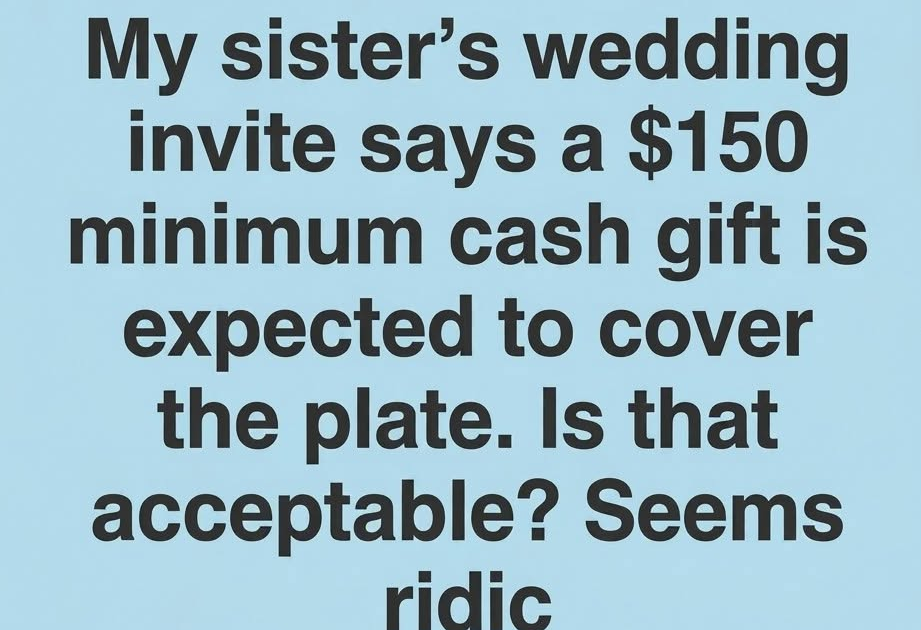
Is Asking Guests for a Specific Cash Amount at a Wedding Crossing the Line?
A Modern Etiquette Debate
Weddings have always evolved alongside society. Traditions that once seemed unchangeable—from arranged marriages to formal receiving lines—have gradually adapted to new cultural norms and financial realities. One of the latest wedding debates centers on gifts, particularly whether couples should ask guests for a specific cash amount.
For some people, the idea feels practical and transparent. For others, it crosses a line between celebration and financial expectation. As weddings become more expensive and cash gifts more common, opinions remain sharply divided.
Why More Couples Are Asking for Cash
Traditional wedding registries were designed for couples setting up a home together. Guests could purchase dishes, appliances, linens, and furniture to help newlyweds start their married lives.
Today, many couples already live together before marriage and may not need household items.
Instead, they often prefer:
Cash gifts
Honeymoon funds
Home down-payment contributions
Travel experiences
Charitable donations
Supporters argue that cash is more useful than receiving duplicate kitchen gadgets or items that may never be used.
The Case for Transparency
Those who support specific cash requests often say the practice simply eliminates guesswork.
Their arguments include:
Clear Expectations
Some guests genuinely prefer knowing what the couple would find most useful.
Practicality
Cash allows couples to put gifts toward meaningful goals rather than accumulating unnecessary possessions.
Rising Wedding Costs
Modern weddings can cost tens of thousands of dollars. Some couples view financial contributions as a practical way to support their future.
Cultural Acceptance
In many cultures, cash gifts have long been standard practice, and discussions about appropriate amounts are considered normal rather than offensive.
From this perspective, a suggested contribution can feel honest rather than rude.
Why Many Guests Object
Despite those arguments, critics believe specifying a cash amount changes the spirit of wedding gift-giving.
Invitations Should Not Feel Like Bills
One of the most common criticisms is that wedding invitations are meant to invite people to celebrate, not present them with a financial obligation.
When a dollar amount is attached, some guests feel attendance starts to resemble a transaction.
Financial Pressure
Not every guest is in the same financial position.
Guests may be:
Students
Retirees
Single parents
Young professionals
People facing financial hardship
A requested amount may create embarrassment or anxiety for those who cannot comfortably afford it.
Gifts Should Be Voluntary
Many etiquette experts maintain that gifts are expressions of generosity and affection, not requirements.
Once a specific amount is demanded, the gift can begin to feel less voluntary.
The Social Media Effect
Stories about wedding gift demands often go viral online.
Examples frequently include:
Couples requesting hundreds of dollars per guest
Wedding websites listing minimum contributions
Public complaints about “cheap” gifts
Guests being criticized for not meeting expectations
These stories often spark intense reactions because they touch on deeper issues involving gratitude, entitlement, and social norms.
Cultural Differences Matter
One reason the debate remains unresolved is that wedding customs vary dramatically across cultures.
In some communities:
Cash gifts are expected.
Amounts are openly discussed.
Contributions often reflect venue costs or family relationships.
In others:
Discussing gift values is considered inappropriate.
Guests decide independently what they can afford.
Monetary expectations are viewed as poor etiquette.
Context matters greatly when evaluating whether a request seems acceptable.
What Etiquette Experts Generally Recommend
Most traditional etiquette authorities draw a distinction between expressing a preference and setting a requirement.
Generally viewed as acceptable:
✔ Suggesting cash instead of physical gifts
✔ Creating a honeymoon or house fund
✔ Providing optional contribution opportunities
✔ Explaining future goals
Often viewed as problematic:
✘ Requiring a minimum amount
✘ Making attendance contingent on payment
✘ Publicly criticizing gift amounts
✘ Monitoring who gave what
The key principle is preserving guest choice.
A Better Middle Ground
Many couples successfully communicate gift preferences without creating pressure.
Examples include:
“Your presence is the greatest gift, but if you’d like to contribute, we are saving for our honeymoon.”
Or:
“We are fortunate to already have a home together. For those who wish, contributions toward our future house fund are appreciated.”
These approaches express preferences while respecting individual circumstances.
Final Thoughts
Whether asking guests for a specific cash amount crosses the line ultimately depends on personal values, cultural expectations, and how the request is communicated.
For many people, requiring a specific amount feels uncomfortable because it transforms a celebration into something that resembles a financial obligation. For others, especially in cultures where cash gifting is standard, the practice may seem entirely reasonable.
What matters most is maintaining the spirit of generosity and appreciation that weddings are meant to celebrate. Guests should never feel judged by the size of their gift, and couples should remember that the people attending their wedding are there to share in one of life’s most meaningful moments.
In the end, the most memorable weddings are rarely defined by how much money was collected. They are remembered for the joy, love, and connection shared among family and friends.