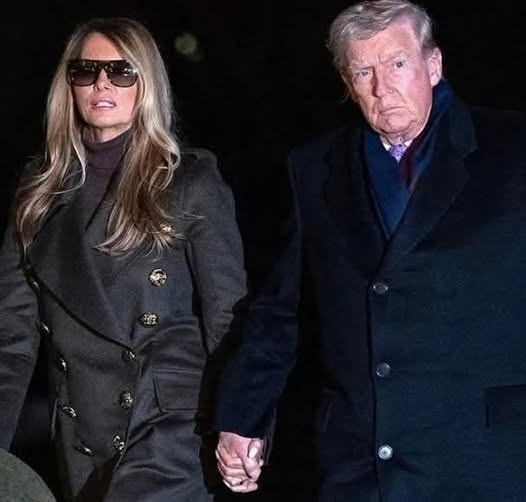
Public Sympathy in Politics: “Thoughts and Prayers” and the Role of Emotional Language in American Public Life
Public figures and their families often find themselves at the center of intense media attention, especially during moments described as “difficult times.” In American political culture, expressions such as “our thoughts and prayers are with the family” have become a common way for citizens, supporters, and even political opponents to acknowledge hardship while maintaining a tone of respect and empathy.
This article explores the meaning behind these expressions, how they function in modern political communication, and why they remain a powerful—yet sometimes debated—part of public discourse in the United States.
The Meaning Behind “Thoughts and Prayers”
The phrase “thoughts and prayers” is widely used in public statements of sympathy. On the surface, it is simple, but it carries multiple layers of meaning:
Thoughts represent attention, concern, and emotional acknowledgment
Prayers reflect spiritual hope, faith, and moral support
Together, they form a socially accepted way of expressing solidarity without requiring political or material action.
In the context of political families, such as that of former U.S. President Donald Trump, these expressions often appear in moments of personal or public difficulty, whether related to health, legal matters, or other challenges.
Emotional Language in Political Communication
Political communication is not only about policies and governance; it is also deeply emotional. Leaders and citizens use language to express empathy, unity, and shared humanity.
Phrases like:
“We stand with you”
“Sending strength and support”
“Our thoughts and prayers are with you”
are designed to achieve several goals:
Show respect during sensitive moments
Avoid political escalation
Demonstrate unity across party lines
Reinforce shared human values
Even in highly polarized environments, emotional language can act as a temporary bridge between opposing groups.
Why Public Figures Receive Global Emotional Support
When a well-known political figure experiences hardship, the response is often amplified far beyond national borders. This is due to several factors:
1. Media Visibility
Modern media ensures that personal or family-related events involving public figures are widely reported.
2. Symbolic Representation
Political leaders are often seen as symbols of broader political movements or national identity.
3. Public Emotional Investment
Supporters and critics alike may feel emotionally invested in public figures due to their influence on national policy.
4. Social Media Amplification
Platforms like X (formerly Twitter), Facebook, and Instagram allow millions of people to express support instantly.
The Role of Sympathy in Political Culture
Sympathy in politics serves multiple functions beyond emotional expression:
A. Humanizing Political Leaders
Public figures are often viewed through the lens of policy and power. Expressions of sympathy remind audiences that they are also human beings with families and personal lives.
B. Reducing Political Tension
During sensitive periods, sympathetic statements can reduce hostility and encourage restraint in public debate.
C. Strengthening Social Cohesion
Shared expressions of concern can temporarily unite people across ideological divides.
Criticism of “Thoughts and Prayers” in Modern Discourse
Despite its widespread use, the phrase “thoughts and prayers” has also faced criticism in modern political discussions.
Critics argue that:
It may replace meaningful action with symbolic language
It can feel repetitive or insincere when overused
It does not address underlying issues or solutions
Supporters, however, argue that:
Emotional support is still valuable
Not all responses need to be policy-based
It reflects cultural and religious traditions of empathy
This tension reflects a broader debate about the role of emotion versus action in public life.
Political Polarization and Public Reactions
In highly polarized environments, even expressions of sympathy can be interpreted differently depending on political affiliation. A message intended as neutral support may be:
Viewed as sincere by supporters
Seen as strategic or performative by critics
Reframed through partisan narratives
This shows how emotional communication in politics is rarely isolated from broader ideological divisions.
Media Influence on Sympathy Narratives
Media organizations play a key role in shaping how public sympathy is perceived. Coverage often highlights:
Official statements from political leaders
Social media reactions from the public
International responses
Historical comparisons to past events
In doing so, the media helps amplify emotional narratives, turning private expressions of sympathy into public conversations.
Social Media and Instant Emotional Response
Unlike in previous decades, modern reactions to political events occur in real time. Social media platforms allow users to instantly share messages such as:
“Praying for the family”
“Wishing strength during this time”
“Thinking of them in this difficult moment”
This immediacy creates a global wave of emotional response that can trend within minutes.
However, it also introduces challenges:
Misinformation can spread quickly
Emotional reactions may lack context
Public discourse can become fragmented
The Balance Between Privacy and Public Interest
One of the central tensions in political life is the boundary between private suffering and public attention. While public figures are subject to scrutiny, their families often face intense media exposure during difficult periods.
Societies continuously negotiate questions such as:
What should remain private?
What becomes public interest?
How should the media report sensitive issues?
Expressions of sympathy often act as a respectful buffer in this space.
Cultural and Religious Dimensions
The phrase “thoughts and prayers” also reflects deeper cultural and religious traditions, particularly in societies where faith plays a role in public life.
In many communities:
Prayer is seen as a form of moral support
Collective empathy is expressed through religious language
Public figures are included in communal spiritual concern
This helps explain why such expressions remain widely used, even in secular political contexts.
The Psychology of Public Sympathy
From a psychological perspective, expressing sympathy for public figures serves several functions:
It allows individuals to process emotional news collectively
It reinforces a sense of shared humanity
It reduces feelings of helplessness in the face of public events
It strengthens group identity and solidarity
Even simple messages can create a sense of connection between strangers.
Historical Continuity of Political Sympathy
Expressions of public sympathy are not new. Throughout history, leaders and citizens have used formal statements to acknowledge hardship in political families.
What has changed is:
The speed of communication
The scale of audience reach
The intensity of media coverage
In earlier eras, such messages were limited to newspapers and official speeches. Today, they spread globally within seconds.
Conclusion
Expressions like “our thoughts and prayers are with the family during these difficult times” remain a powerful and deeply rooted part of political communication. They reflect a mixture of empathy, cultural tradition, and social expectation.
In the context of modern American politics and public life—including moments involving figures such as Donald Trump—these statements serve as reminders that beyond political debate and ideological differences, there remains a shared human response to hardship.
While critics may question their effectiveness or sincerity, such expressions continue to play an important role in how societies process public events, offering emotional acknowledgment in a world often defined by division and speed.
Ultimately, sympathy in politics is not just about words—it is about the ongoing attempt to balance humanity with public life, emotion with governance, and private suffering with public visibility.