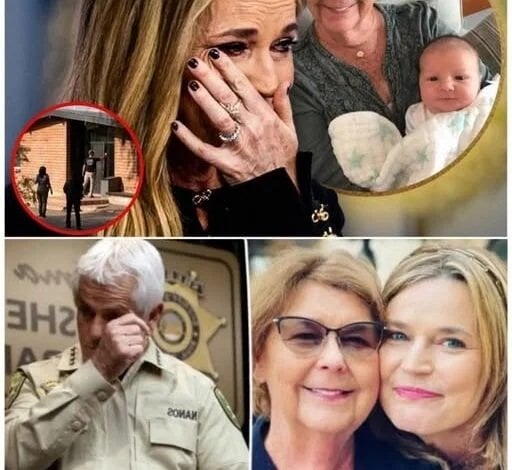
Savannah Guthrie didn’t just choke up on live TV. She shattered.
In seconds, the nation’s calmest voice became a daughter hearing, in real time, that hope for her missing mother was slipping away. The cameras kept rolling. The search was changing. And the woman who had narrated our worst days was suddenly living he… Continues…
CONTINUE READING→
Under the glare of studio lights, Savannah faced the one story she never wanted to read: the quiet, procedural language that signals authorities no longer expect a rescue. For nearly a month, the country had watched the desert searches, the grainy Ring footage, the unanswered reward money. On that February morning, the language shifted—“search” gave way to “investigation,” “missing” to “presumed.” You could hear the moment it landed in her voice.
Yet what followed was not spectacle, but something painfully human. Viewers saw the cost of every headline distilled into one trembling anchor who refused to look away, even when the victim was her own mother. In the days since, the scaled‑back search has collided with a swelling wave of public prayer, digital tips, and stubborn hope. Until there is a body, a confession, or a miracle, Savannah’s broadcast stands as both a breaking point and a vow: the story is not over.