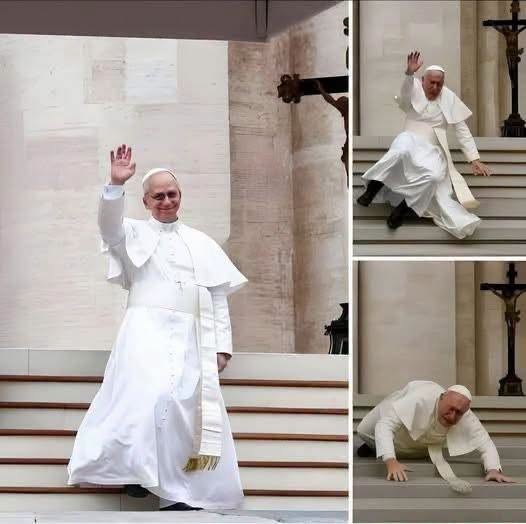
The crowd roared in St. Peter’s Square, but his eyes were somewhere else.
Not Rome. Not Chicago. Peru.
Behind the ceremony, behind the Palio and the Fisherman’s Ring, lies a story he has never fully told—a prediction whispered decades ago in a dusty chapel, naming him long before the world knew his face. As the second American Pope lifts his hands in blessing, a question burns beneath the applause: what did he hear in Peru that convinced him this moment had been written more than 26 years ago? What private words, spoken in Spanish, marked him for the Vatican before he even dreamed of white cassocks and papal balconies? He hinted once, then went si… Continues…
CONTINUE READING→
Long before the white smoke, Leo XIV was a young priest walking the streets of Chiclayo, visiting homes with dirt floors and chapels with broken pews. There, among the poor, an elderly religious sister is said to have taken his hands and told him, calmly, that he would one day be “pastor of pastors,” a shepherd not just for a parish, but for the world. He laughed it off, yet the words never left him.
Years passed. He returned to the United States, rose through the Church, watched Francis reshape the papacy. Each promotion, each new responsibility, made that Peruvian prophecy harder to dismiss. When he finally stepped onto the balcony as Leo XIV and greeted the faithful in Spanish, he knew exactly whom he was answering. For him, this pontificate is not an accident of conclave politics, but the unfolding of a call first spoken in a forgotten corner of Peru.