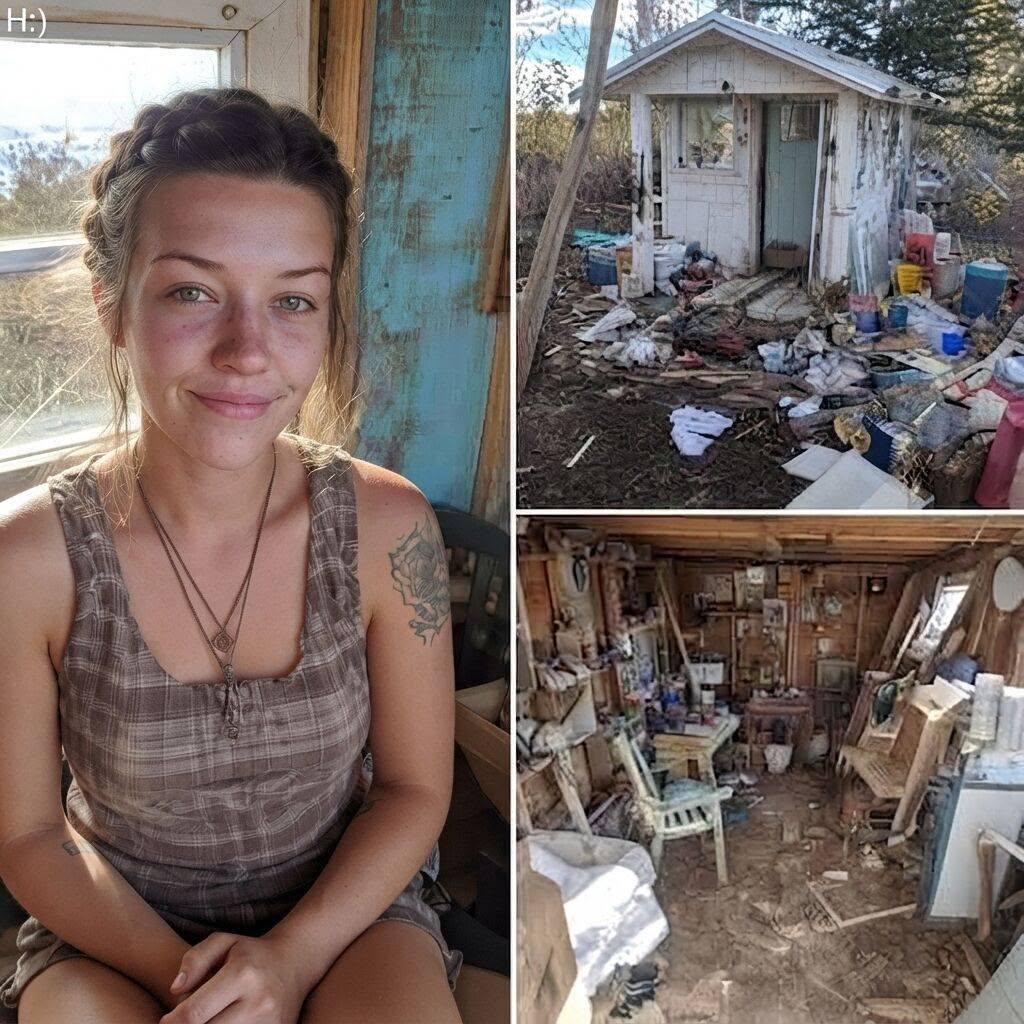
After a painful divorce, Heather found herself rebuilding her life with very little. One possession, however, gave her a new opportunity: a small, worn shed on a modest piece of land. Measuring just 10 by 11 feet, it hardly seemed suitable as a home, but Heather had already learned to appreciate simple living through years of traveling and life in a van. Instead of replacing everything she had lost, she decided to transform the tiny structure into a place of her own.
Inside, every inch was carefully planned. Natural light helped make the space feel larger, while a comfortable couch created a relaxing living area. A swinging desk served as both a workspace and a flexible part of the room, allowing Heather to move it when she wanted more space. She avoided unnecessary furniture and focused on items that were practical while still making the home feel personal and welcoming.
A small wood-burning stove provided warmth, while a camping stove handled cooking. Open shelves stored dishes and food without taking up valuable space. One of the most meaningful items was an old refrigerator that had belonged to Heather’s mother, giving the tiny home a connection to her family. Even the bathroom was designed creatively, with a composting toilet placed beneath the sink to save floor space.
Above the main room, a small loft became Heather’s bedroom. Although compact, it gave her a peaceful private space while keeping the lower level open for daily activities. Rather than asking how much she could fit inside, Heather focused on what she truly needed.
The transformation became more than a clever tiny-home project. It represented Heather’s ability to rebuild after losing the future she had expected. The forgotten shed became a place of safety, comfort, and independence. For Heather, a home did not need to be large or luxurious. It simply needed to feel like her own. The shed that once represented what she had lost ultimately became the foundation for “a simpler life” filled with freedom, resilience, and a fresh start.