The renowned political analyst Lou Dobbs has passed away at the age of 78, leaving behind a legacy as a polarizing figure in American media. Best known for his tenure at CNN and Fox News, Dobbs made his mark with sharp commentary and often contentious viewpoints, particularly regarding his outspoken remarks about former President Barack Obama, which sparked considerable debate throughout his career.
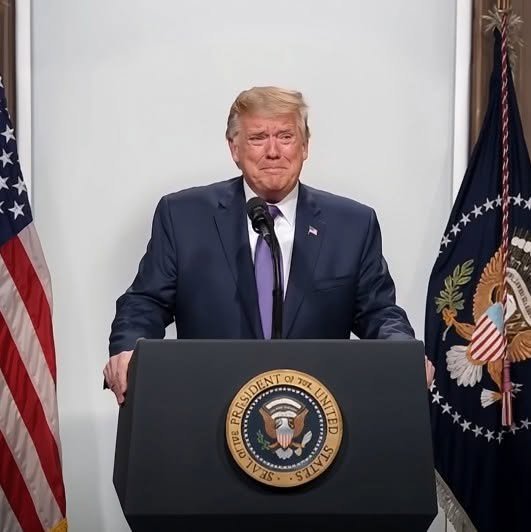
In a heartfelt tribute on Truth Social, former President Donald Trump expressed his deep admiration for Dobbs. “Lou was an incredible talent,” Trump wrote, describing him as a “friend and truly amazing reporter, journalist, and artist.” He continued, “Lou was unique, and he loved our nation.” The former president’s words reflect the significant impact Dobbs had on political reporting and his lasting influence in the media landscape.
Dobbs’ career spanned decades, with his journey into television beginning in the mid-1970s. His early years were spent in radio, where he worked at KBLU in Arizona. However, it was his move to NBC’s King-TV in Seattle that marked the beginning of his transition to television. Dobbs quickly made a name for himself as a tenacious and insightful reporter. In 1980, he became one of the first reporters at CNN, where he would go on to host Moneyline, a business news program that gained widespread popularity. His success at CNN established him as a household name in the world of political analysis and business reporting.
However, Dobbs’ career was not without its controversies. His outspoken views, particularly on issues like illegal immigration, led to his departure from CNN in 2009. Despite the controversies, Dobbs remained a prominent figure in media, shifting to Fox Business, where he began hosting Lou Dobbs Tonight in 2010. His program became a staple on the network, often reflecting his strong conservative stance on various political and economic issues. Dobbs continued hosting the show until its cancellation in 2021, marking the end of an era for the program that had made him a central figure in cable news for over a decade.
Throughout his career, Dobbs maintained a distinctive voice, never afraid to challenge the political establishment or address issues head-on, even when those opinions sparked backlash. His unwavering commitment to his beliefs made him both admired and criticized, but undeniably left a lasting imprint on political discourse.
As the news of his passing reverberates through the media world, tributes continue to pour in, celebrating his legacy as one of the most influential figures in modern television news. His contributions to the field, though often controversial, have shaped the landscape of American political reporting, and his absence will be felt by many in the world of journalism.
Lou Dobbs leaves behind a career that was as much about sparking conversation as it was about reporting the news, forever remembered as a giant in the realm of political analysis.
Lou Dobbs was one of the most recognizable and controversial television personalities in American news. Over a career that spanned more than four decades, he worked as a reporter, business journalist, television host, commentator, author, and radio personality. He became particularly well known for his work at CNN and Fox Business Network, as well as for his strong views on immigration, trade, American economic policy, and politics.
Dobbs was also one of the most prominent media supporters of Donald Trump. His relationship with Trump became an important part of his later career, especially during Trump’s presidency and the highly disputed 2020 presidential election.
Although Dobbs began his career primarily as a business and economic journalist, his television work gradually became more political and opinion-oriented. By the later years of his career, he was known as a conservative political commentator as much as he was known as a financial journalist.
Lou Dobbs died on July 18, 2024, at the age of 78. His death marked the end of a long and influential career in American television and political commentary.
Louis Carl Dobbs was born on September 24, 1945, in Childress, Texas. His family later moved to Idaho, where Dobbs spent part of his childhood.
Dobbs grew up in a family that was not wealthy, and his early experiences influenced many of the economic and political issues that later became central to his career. He frequently spoke about his working-class background and his belief that ordinary Americans should have greater economic opportunities.
His childhood experiences also helped shape his later interest in American industry, employment, wages, and the economic pressures facing working families.
Dobbs attended Harvard University, where he studied economics and earned a degree in the subject. His education gave him a strong foundation for the business and financial journalism career that followed.
After graduating, Dobbs initially worked outside traditional journalism. He held positions connected to government programs and banking before eventually deciding to pursue a career in broadcasting.
His transition into journalism represented a major change in direction. Rather than pursuing a conventional career in finance or banking, Dobbs became interested in reporting and broadcasting.
Dobbs began his journalism career at local television and radio stations. One of his early reporting jobs was in Yuma, Arizona, where he worked as a police and fire reporter.
He later worked in Phoenix and Seattle, gaining experience as a news anchor and business reporter. These early positions helped him develop the broadcasting skills that would eventually lead him to one of the most important opportunities of his career.
That opportunity came in 1980, when Dobbs joined the newly launched Cable News Network, better known as CNN.
Lou Dobbs joined CNN in 1980, the same year the network began broadcasting. He became one of the network’s earliest and most important business journalists.
Dobbs served as CNN’s chief economics correspondent and became the anchor and managing editor of Moneyline, a pioneering television program devoted to business and financial news.
At a time when business news was not yet as prominent on television as it would later become, Dobbs helped establish financial reporting as an important part of cable television.
His work covered subjects such as Wall Street, corporations, employment, international trade, economic policy, markets, and the broader American economy.
Moneyline became one of Dobbs’s signature programs and established him as a major figure in American television journalism.
The program featured interviews with business leaders, economists, politicians, government officials, and other influential figures. Dobbs developed a reputation for asking direct questions and discussing complicated economic subjects in a way that was accessible to ordinary viewers.
Over time, however, Dobbs increasingly incorporated his own opinions into his broadcasts. His coverage expanded beyond traditional financial reporting and increasingly included political and social issues.
His views on immigration, international trade, American manufacturing, globalization, and the loss of American jobs became particularly prominent.
During the 1990s and 2000s, Dobbs became increasingly outspoken about the direction of the American economy.
He strongly criticized globalization and trade agreements that he believed encouraged American companies to move manufacturing and other jobs overseas. He became particularly critical of the North American Free Trade Agreement, commonly known as NAFTA.
Dobbs argued that American workers were being harmed by globalization and that government policy should place greater emphasis on protecting American jobs and domestic industries.
His program also became known for its coverage of immigration. Dobbs advocated for stronger enforcement of immigration laws and frequently discussed illegal immigration as an economic and political issue.
These positions made him increasingly popular with some viewers while also making him a highly controversial figure among critics.
Dobbs left CNN in 1999 after years of disagreements and changes within the network.
During his time away from CNN, he became involved in other media and business projects, including the creation of Space.com, a website dedicated to space and astronomy news.
He eventually returned to CNN after being recruited back to the network. His return allowed him to continue developing his television career while giving him an even larger platform for his views on economics, politics, immigration, and American society.
In 2003, Moneyline was renamed Lou Dobbs Tonight.
The new name reflected the increasingly personal and opinion-driven nature of the program. Dobbs was no longer simply presenting financial information. He was becoming a major political commentator with a loyal audience.
His program covered immigration, trade, government spending, American manufacturing, elections, national security, and other major political issues.
Dobbs eventually left CNN again in November 2009.
After leaving CNN, Dobbs joined Fox Business Network. The network announced in 2010 that he would host a new daily program, and Lou Dobbs Tonight returned to television in 2011.
The Fox Business version of the program became one of the network’s most recognizable shows. Dobbs continued discussing business and economic issues, but politics became an increasingly important part of the program.
His conservative political views were particularly visible during this period.
Fox Business described Dobbs as an important addition to its lineup, while Dobbs said he was excited to join the network and contribute to its programming.
One of the defining relationships of the later part of Lou Dobbs’s career was his friendship and political alliance with Donald Trump.
Dobbs strongly supported Trump’s political message, particularly Trump’s positions on immigration, trade, American manufacturing, globalization, and economic nationalism.
The two men had many similar views about the economic challenges facing the United States. Both criticized trade policies that they believed had contributed to the loss of American manufacturing jobs and both advocated policies that placed greater emphasis on American workers and domestic production.
Dobbs became one of Trump’s most consistent supporters in the television media.
Trump also appeared on Dobbs’s programs and spoke positively about him on numerous occasions. Their relationship went beyond the normal relationship between a television host and a political guest. They became longtime friends.
When Dobbs died in 2024, Trump publicly described him as a friend and praised his abilities as a journalist, reporter, and television personality.
Donald Trump’s presidential campaign in 2016 brought many of the political issues that Dobbs had discussed for years into the center of American politics.
Trump campaigned heavily on immigration reform, stronger border enforcement, renegotiating trade agreements, bringing manufacturing jobs back to the United States, and challenging political and economic establishments.
These positions closely reflected themes that Dobbs had been discussing on television for many years.
As Trump’s presidency continued, Dobbs became one of his strongest supporters in television media.
His program frequently defended Trump’s policies and criticized opponents of the administration.
The 2020 presidential election became one of the most controversial periods of Dobbs’s career.
After Joe Biden defeated Donald Trump, Trump and his allies made numerous claims alleging widespread election fraud. Dobbs gave significant airtime to claims concerning voting machines and election technology.
Some of the claims broadcast on Fox programs were later determined to be false.
Voting technology companies, including Smartmatic and Dominion Voting Systems, became involved in major defamation litigation related to statements made by Fox personalities.
Fox Corporation ultimately reached a major settlement with Dominion Voting Systems for $787.5 million. Dobbs was also named in litigation involving Smartmatic.
These events became an important part of the public discussion surrounding Dobbs’s later career and legacy.
In February 2021, Fox Business canceled Lou Dobbs Tonight.
The cancellation came as Dobbs and other Fox personalities faced legal scrutiny over statements concerning the 2020 election and voting technology companies.
Despite the cancellation, Dobbs did not disappear from political media.
After leaving Fox Business, Dobbs continued his work through radio and digital media.
He hosted The Great America Show, where he continued discussing American politics, economics, culture, government, and national issues.
His later media work continued to attract an audience of viewers and listeners who agreed with his conservative political perspective.
Dobbs was also a bestselling author.
His books focused heavily on the American economy, globalization, trade, employment, politics, and the challenges facing the American middle class.
Among his best-known books were Exporting America, War on the Middle Class, and Independents Day.
Through his books and television programs, Dobbs developed a consistent message centered on protecting American workers and challenging economic policies that he believed weakened the middle class.
Immigration was one of the most important and controversial subjects of Dobbs’s career.
He repeatedly argued that illegal immigration placed pressure on American workers, wages, public resources, and national security.
His coverage of immigration attracted strong support from viewers who shared his concerns but also generated significant criticism from immigrant-rights organizations and Latino leaders.
His immigration commentary became one of the defining features of his television career.
Dobbs was also a longtime critic of globalization.
He argued that American corporations had moved too many jobs and manufacturing operations overseas and that trade policies had failed to adequately protect American workers.
His opposition to NAFTA and other trade agreements became a recurring theme on his programs.
These positions later aligned closely with Trump’s economic message, which emphasized American manufacturing, tariffs, domestic production, and reducing America’s dependence on foreign supply chains.
Lou Dobbs was never a figure who attracted universal agreement.
Supporters viewed him as an outspoken journalist who was willing to challenge powerful institutions and speak about issues that they believed traditional media ignored.
Critics argued that his programs increasingly blurred the line between journalism and political advocacy.
This tension became especially visible during his later years, when his television programs became strongly associated with conservative politics and support for Donald Trump.
Regardless of one’s political opinion, Dobbs had a major influence on the development of cable news and political commentary in the United States.
Throughout his career, Dobbs received recognition for his broadcasting and journalism.
He received a George Foster Peabody Award for his coverage of the 1987 stock market crash and was also honored with an Emmy Award for Lifetime Achievement.
His career was particularly significant because he helped establish business journalism as a major part of cable television.
Lou Dobbs was married to Debi Lee Segura, a former CNN sports anchor and reporter.
The couple had children and maintained a relatively private family life despite Dobbs’s highly public career.
Dobbs was also known for his interest in horses and rural life. He owned a large property in New Jersey and spent time away from television on his farm.
Lou Dobbs died on July 18, 2024, at the age of 78.
His death was announced through his social media account, which described him as a fighter who remained committed to what mattered most to him: his faith, his family, and his country.
The exact cause of his death was not publicly disclosed at the time of the announcement.
Donald Trump publicly mourned Dobbs and described him as a longtime friend. Trump praised his abilities as a journalist and television personality and said that Dobbs understood the world and current events better than many others.
Lou Dobbs left behind a complicated and influential legacy in American media.
He began his career as a business journalist and became one of the earliest major faces of CNN. His Moneyline program helped make financial news accessible to a mass television audience.
Over the decades, however, his career evolved. He became increasingly outspoken on political and social issues, particularly immigration, trade, globalization, American manufacturing, and national identity.
His strong support for Donald Trump eventually became one of the defining characteristics of his public image.
To his supporters, Dobbs was a journalist who was willing to challenge the political establishment and defend the interests of ordinary Americans. To his critics, he became an example of the growing overlap between television journalism and political advocacy.
Whatever one’s opinion of his politics, Dobbs played a significant role in the history of American cable television.
The relationship between Lou Dobbs and Donald Trump remained important until the end of Dobbs’s life.
The two shared many political beliefs, especially concerning immigration, trade, globalization, American manufacturing, and economic nationalism.
Dobbs provided Trump with a friendly and supportive platform during periods when Trump faced intense criticism from other media organizations.
Trump, in turn, frequently praised Dobbs and appeared on his programs.
When Dobbs died in July 2024, Trump’s public tribute demonstrated the personal nature of their relationship. Trump did not simply describe him as a television commentator; he referred to him as a friend and emphasized the respect and affection he had for Dobbs.
Lou Dobbs was a major figure in American television who transformed from a business journalist into one of the country’s most recognizable conservative political commentators.
From the launch of CNN in 1980 to his years at Fox Business Network, Dobbs built a career around economics, politics, American workers, immigration, and national identity.
His friendship with Donald Trump became particularly significant during Trump’s rise to political power and remained one of the most discussed aspects of Dobbs’s later career.
His legacy remains controversial, but his influence on cable news, business journalism, and conservative political commentary is undeniable. Lou Dobbs helped shape the way millions of Americans consumed economic and political news for more than four decades.