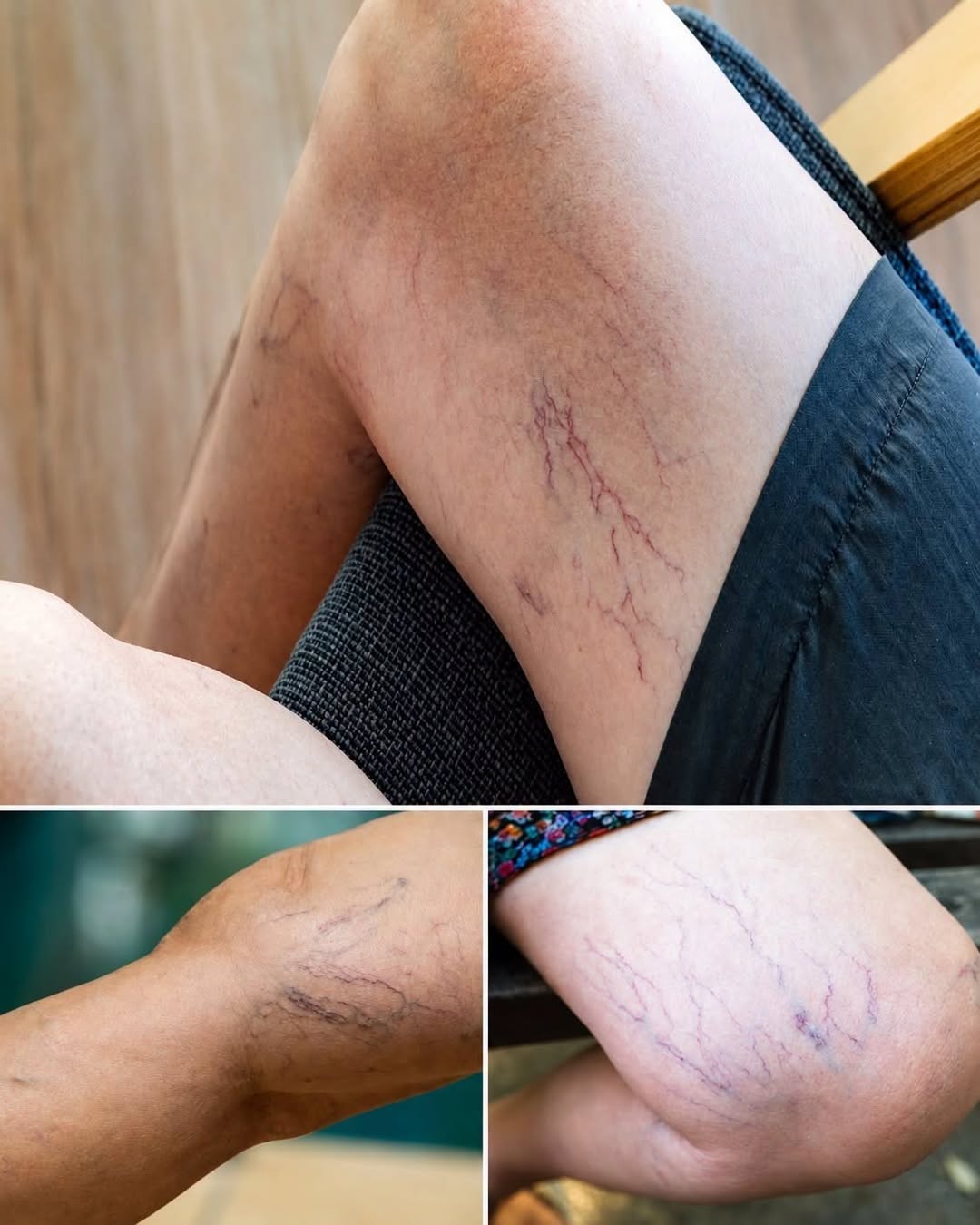
Purple veins on your legs can look harmless—until they aren’t.
They start as faint webs, then spread, ache, burn, or swell.
Some stay cosmetic. Others whisper of clots, failing valves, or skin breakdown that won’t heal.
Knowing the difference can protect your legs—and your life. Ignore the wrong sign, and the co… Continues…
CONTINUE READING→
Spider veins often appear as delicate purple, blue, or reddish webs on the thighs, calves, ankles, or behind the knees. They are usually flat and much smaller than bulging, twisted varicose veins, and in many people they cause no pain at all. Still, they are a visible clue that the veins in the legs are under pressure. Age, genetics, pregnancy, hormonal shifts, extra weight, and long hours of sitting or standing can all strain the one-way valves that keep blood moving upward, making these surface vessels enlarge.
The key is not to panic, but not to dismiss changes either. Aching, heaviness, burning, itching, or mild swelling can be discussed with a clinician, especially if one leg feels different from the other. Persistent swelling, darkening skin at the ankles, hardened areas, or slow-healing sores may signal chronic venous insufficiency and deserve evaluation. Sudden one-sided swelling, warmth, redness, or sharp pain can indicate a clot and needs urgent care. Movement, leg elevation, and, when appropriate, properly fitted compression stockings can support circulation, but no cream or tight garment can “fix” a damaged valve. A dermatologist or vein specialist can explain whether simple reassurance, lifestyle changes, or procedures like sclerotherapy or laser treatment make sense, helping you respond thoughtfully rather than fearfully.