HomeNews
Jim Curry | Source: Getty Images
Dispatch Call Reveals Where Tim Curry Was Found — 14 Years Earlier, a 911 Call He Initially Objected to Ended Up Saving His Life
Emergency dispatch recordings have revealed new details surrounding the tragic death of “The Rocky Horror Picture Show” icon Tim Curry.
Fans across the world are grieving as breaking reports confirm the beloved actor passed away late Tuesday night after a legendary career.
While dispatch tapes now disclose where officials found him, the tragic event strangely echoes a near-fatal crisis from fourteen years ago.
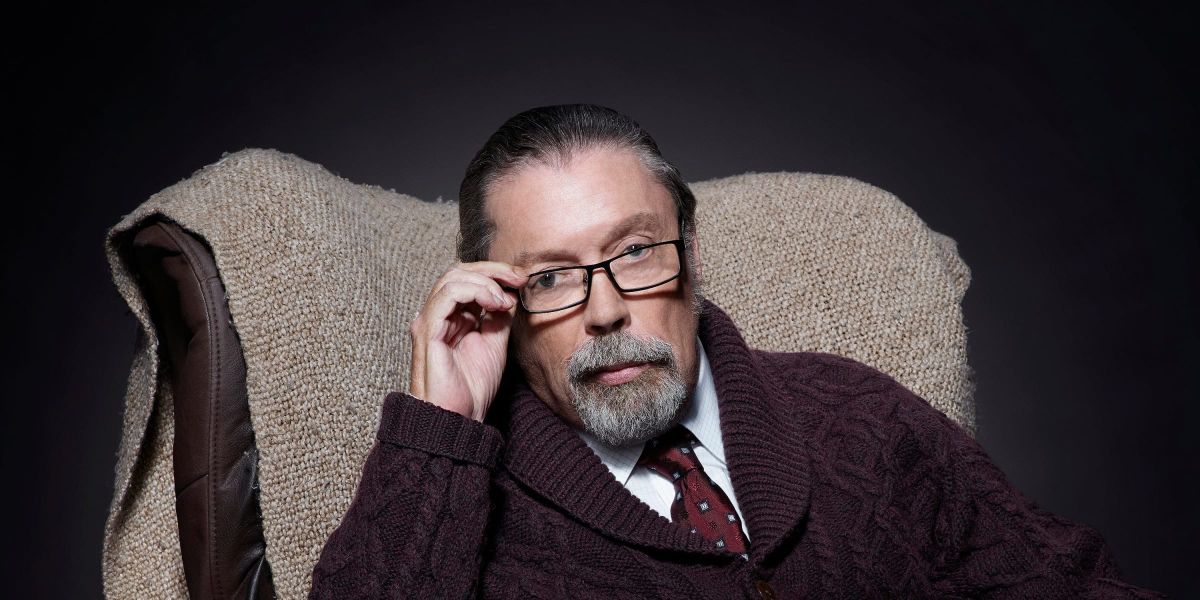
Tim Curry, the actor who turned Dr. Frank-N-Furter into a cult icon in The Rocky Horror Picture Show, has died. | Source: Getty Images | Source: Getty Images
Uncovering the Scene in Los Angeles
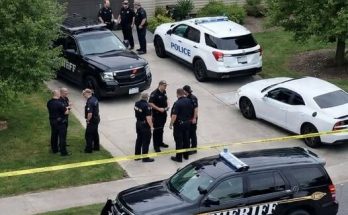
Police officers responded directly to the 80-year-old actor’s Los Angeles home at 11:23 PM on Tuesday. According to TMZ, emergency audio confirms police launched a death investigation after paramedics pronounced Curry dead at the scene.
The Los Angeles Fire Department confirmed they were called earlier that evening over a medical emergency. Officials verified that no foul play is suspected in his death.
Tim Curry, the actor who turned Dr. Frank-N-Furter into a cult icon in The Rocky Horror Picture Show, has died. | Source: Getty Images
A Peculiar Health Emergency
The news of his death comes just one day after country star Dolly Parton passed away. The loss brought back memories of Curry’s frightening health crisis in 2012.
While getting a routine body massage, the actor suffered a severe paralytic stroke. Curry called the event very peculiar because he did not fade to black or feel sick.
His body showed clear physical changes that alerted his masseur to a dire emergency. Yet Curry had no idea anything was wrong and felt completely normal.
He had spent more than a decade battling serious health issues, and he passed away late Tuesday night at his home in Los Angeles. | Source: Getty Images
Overriding the Actor’s Objections
When the therapist insisted on dialing 911, Curry pushed back against the idea. As reported by The Mirror, Curry told his masseur, “That’s so silly.”
Curry believed his therapist was overreacting to the whole situation. He thought riding in an ambulance was a silly and unnecessary exercise.
Fortunately, the quick-thinking masseur ignored the actor’s protests and called an ambulance anyway. That bold choice ultimately saved the star’s life.
Curry wasn’t being stubborn for the sake of it. He genuinely had no idea how serious his condition was, and that disconnect between how he felt and what was actually happening in his body is what makes the story so unsettling in hindsight. | Source: Getty Images
Surviving Major Brain Surgery
Doctors evaluated Curry and determined he needed an immediate craniectomy. Surgeons operated on his skull to remove two blood clots that were clogging blood flow and starving his brain of oxygen.
Curry only learned how severe his condition was after the brain surgery was finished. He later recalled wondering how he was still alive when he had not felt any warning signs.
The stroke left the star paralyzed on his left side and dependent on caregivers. He was left unable to walk and used a wheelchair for the rest of his life.
Curry’s health struggles trace back to 2012, when he suffered a massive stroke — one that started in the most unremarkable way possible. | Source: Getty Images
Living with the Aftermath
As detailed by People, Curry spent several weeks unable to speak during his recovery. Still, he felt thankful he did not suffer a speech stroke that would permanently rob his voice.
The actor opened up about his health struggles in his memoir Vagabond. He admitted that recovering from major brain surgery took a massive toll on his daily life.
Tim Curry at “The Academy Museum Hosts 50th Anniversary of ‘The Rocky Horror Picture Show’ with Tim Curry and Sins O’ The Flesh” on September 26, 2025, in California, United States. | Source: Getty Images
During a September 2025 screening at LA’s Academy Museum, Curry joked about his “silly chair” and left leg trouble. He remained deeply grateful to the brave masseur who trusted his gut 14 years ago.
As we previously reported, Curry’s own medical emergency eerily echoed a childhood trauma he carried for decades — the day his father suffered a stroke and spoke what would become unforgettable words.
Before his death, Curry had been looking back on his extraordinary life with a mixture of humor, candor and remarkable resilience. In October 2025, he sat down with Ben Mankiewicz for an interview tied to the release of his memoir, “Vagabond,” discussing his childhood, his career and the severe stroke he suffered as an adult.
But when the conversation turned to his father, Curry was taken back to a moment when he was only 10 years old.
Before the Fame, There Was a Navy Chaplain’s Son
Curry was born in Cheshire, England, in 1946 and grew up as the son of James Curry, a chaplain in the Royal Navy. Because of his father’s work, the family moved frequently, roughly every 18 months. Curry recalled that his father spent much of his time preaching at naval bases around the country, with the family often attending his Sunday services.
He remembered his father as a man who could command a room without being overbearing. “He was a good preacher,” Curry said, recalling how his father could hold people’s attention because his sermons came from somewhere “very simple and touching.”
Tim Curry during his October 2025 interview with Ben Mankiewicz, where he reflected on his childhood, career and the profound influence of his father. | Source: YouTube/CBS Sunday Morning
Curry also remembered him as “very tolerant” and someone who “really enjoyed people.” He described his father as empathetic and selfless, qualities he later believed helped shape his own ability to understand even the most difficult characters he played.
That admiration made what happened next all the more difficult.
Then, One Day, Everything Changed
Curry was still a child when his father suffered a stroke. In the 2025 interview, he recalled that he did not understand what was happening at first.
His mother, Maura Patricia (Langmead), became frightened and called an ambulance, and medical workers carried Jim down the stairs and out toward the driveway on a stretcher.
Tim Curry during his October 2025 interview, as he reflected on his father’s personality and the childhood moment that changed his life. | Source: YouTube/CBS Sunday Morning
Curry was there as his father was about to be taken away. And then his father spoke to him.
“Look after your mother.”
Curry was only 10 years old. For an adult, the words might have sounded like a simple request from a husband concerned about his wife. To a child, they carried a weight Curry could hardly comprehend.
“I remember thinking, ‘How exactly do I do that?'” he recalled. “You know, it seemed like an awful responsibility for a kid.”
Tim Curry during his October 2025 interview, recalling the heartbreaking final words his father spoke to him before being taken away in an ambulance. | Source: YouTube/CBS Sunday Morning
Yet Curry later came to believe that his father had not intended to place such a tremendous burden on him. “I know that he didn’t mean it like that,” Curry said.
When Mankiewicz asked whether his father had necessarily meant that Curry would have to look after his mother forever, the actor disagreed. “No, no, I don’t think so,” he said. “I think that he was also trying to make me feel older and more adult.”
Still, the words stayed with him. Curry said his father’s request made him feel older for about two years.
Tim Curry during his October 2025 interview, explaining why his father’s final request stayed with him and made him feel more grown-up at just 10 years old. | Source: YouTube/CBS Sunday Morning
The Goodbye Wasn’t Actually the End
There was another painful twist to the story: his father did not die immediately from the stroke. Instead, he was taken to a naval hospital, where he developed pneumonia twice. Curry later explained that the pneumonia, rather than the stroke itself, ultimately took his father’s life.
“He didn’t die from the stroke as people often do,” Curry said in the interview. Curry remembered the hospital as a “pretty crappy naval hospital” that was “not exactly state-of-the-art.”
Eventually, the news arrived while Curry was already away at boarding school. The headmaster called him in and sat him down before delivering the devastating message. “I’ve got bad news for you. Your father got very bad pneumonia, and he’s gone. He’s died, I’m afraid.”
Curry was left to process the death of a father he adored while still trying to understand what his final words had meant.
His Father’s Death Followed Him Into Adulthood
Curry had already been sent away to boarding school at an unusually young age, something he later described as “brutally early.” His father’s death added another layer of responsibility to a child who was already navigating a major transition.
In a later Guardian interview about his memoir, career and stroke, Curry recalled trying to support his mother and behave as though he were the man of the house. He was not convinced he had been very successful at it. His father had been only 49 when he died, something Curry struggled to reconcile.
“A baby,” he said of his father’s age. “I couldn’t reconcile it as being the truth.” The loss also changed his relationship with his mother. Curry later described her as increasingly volatile after his father’s death, while also acknowledging that he eventually came to understand some of the pain she had carried herself.
For Curry, those early losses became part of the complicated emotional history he carried into adulthood.
Decades Later, Curry Faced His Father’s Fate
The connection became especially striking when Curry himself suffered a severe stroke in 2012. He was 67 at the time and was receiving a massage when the masseur noticed something was wrong. Curry insisted that he was fine, but the masseur ignored him and called an ambulance.
That decision may have saved his life. Curry was rushed to the hospital and underwent brain surgery. The stroke left the left side of his body paralyzed, and he spent months undergoing rehabilitation.
He was unable to speak for several weeks and had to relearn abilities many people take for granted, including speaking clearly and using his hand.
Read also
Tim Curry Never Married and Was Fiercely Private About His Love Life — His Blunt Explanation and Final Public Photos
Hayden Panettiere Opened Up About Her Brother Jansen Years After His Sudden Loss — and the Guilt She Carried
‘Diff’rent Strokes’ Cast: Where Are They Now? — See Them Then and Now in Photos
In a 2025 account of Curry’s stroke and health history, he explained that the effects never completely disappeared. He continued to use a wheelchair and struggled with his left leg, while his short-term memory was also severely affected.
He even gave his paralyzed left hand a name: Teddy. It was an unusual way of dealing with a part of his body that had become a source of frustration. But Tim Curry said considering it as a separate entity helped him approach it with care and compassion rather than anger.
His Own Stroke Took Him Back to His Father’s
For Curry, the similarities between his medical emergency and his father’s were impossible to ignore. His father had suffered a stroke decades earlier and died after complications in the hospital. Then Curry found himself facing a stroke of his own, followed by an extended period of rehabilitation.
In the aftermath, Curry admitted that he thought about his father. “It was an odd thing, because my father had a stroke and died very soon afterwards,” he told the Guardian.
He also wondered how his father had coped with his own illness. “I did think about how he coped,” Curry said. “He was very determined to not be a changed man for us, you know.”
The parallel gave Curry’s childhood memory a new and deeply personal dimension. The little boy who had once stood beside an ambulance wondering how he was supposed to “look after” his mother had eventually become a grown man facing the same medical emergency that had changed his family forever.
Somehow, Curry Still Found a Way to Laugh
The parallels were serious, but Curry refused to let illness become the only story of his later life. His humor remained one of his defining traits. Reflecting on his own stroke, he told the Guardian, “The day before I had the stroke, I smoked three packs of Marlboro Reds.”
Then came the punchline: “I won’t be doing that again!” Even after losing much of his mobility, Curry maintained a stubborn refusal to indulge in self-pity. He acknowledged the frustration and limitations but continued looking for reasons to work, laugh and connect with his fans.
That attitude was perhaps best captured when he reflected on the career that had taken him from a Navy chaplain’s son to one of Britain’s most recognizable cult actors.
“I’ve had the opportunities,” Curry said. “And I’m still showing up. You know? I think that’s what you have to do. You have to keep showing up.” And throughout all those years, one sentence from his father remained with him.
“Look after your mother.”
The information in this article is not intended or implied to be a substitute for professional medical advice, diagnosis or treatment. All content, including text, and images contained on ondoho.com, or available through ondoho.com is for general information purposes only. ondoho.com does not take responsibility for any action taken as a result of reading this article. Before undertaking any course of treatment please consult with your healthcare provider.