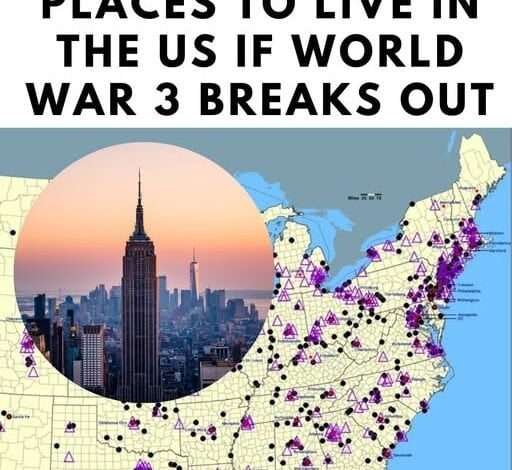
In a world where tensions between the United States, Israel, Iran, and other powers keep edging toward open confrontation, the quiet fields of Montana, Wyoming, Colorado, Nebraska, and the Dakotas carry a burden few see. Beneath their soil lie the ICBM silos that form the backbone of America’s nuclear deterrent, making them prime targets in any first strike. Iowa and Minnesota, though hosting fewer silos, still sit in the predicted path of radioactive plumes, their farms and towns exposed not by intention, but by the wind itself.
Yet the danger is not confined to these heartland states. Fallout models show that even regions considered relatively safer—like parts of the Northeast and Southeast—would feel the cascading effects of a nuclear exchange through disrupted infrastructure, supply chains, and governance. Geography may shape the blast maps, but no border can contain the economic, environmental, and psychological shock. In that stark reality, diplomacy, de-escalation, and public preparedness are not abstractions; they are the last, fragile defenses between tense peace and irreversible loss.