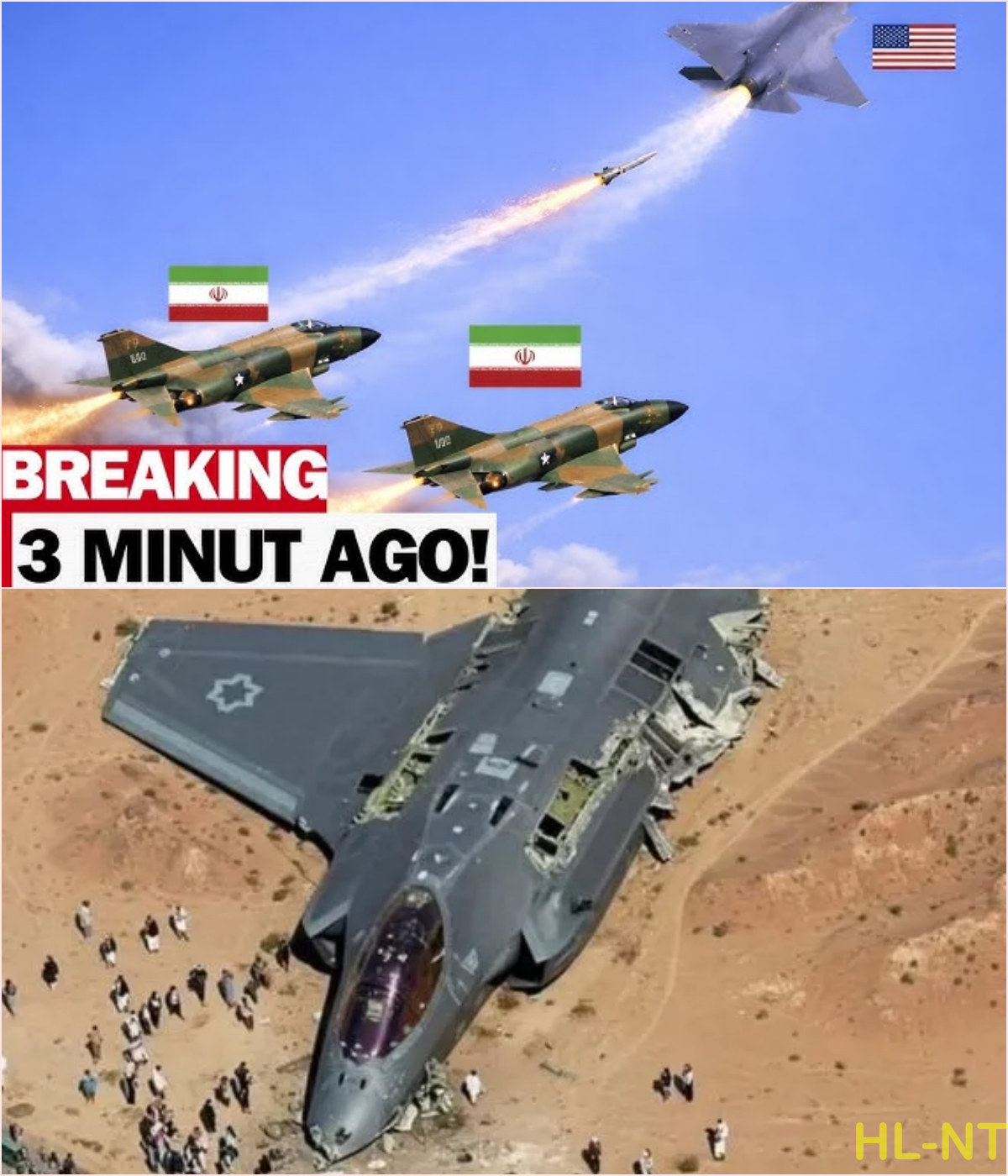
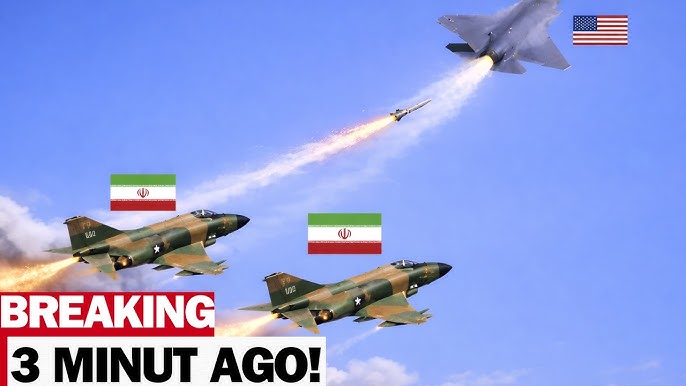
In a dramatic turn of events, six Iranian F-4 Phantom fighter jets attempted to ambush a single U.S. F-35 stealth fighter in a high-stakes aerial confrontation that has captured the attention of military analysts and enthusiasts alike.
The incident, which unfolded in late February 2026, was not merely a routine engagement but rather a complex intelligence operation that revealed significant insights into both Iranian air defense capabilities and U.S. military tactics.
As tensions in the Middle East continue to simmer, the implications of this encounter extend far beyond the immediate action in the skies. It serves as a stark reminder of the intricate dance of military power and technology that defines modern warfare.
The Setup: A Game of Cat and Mouse
The stage was set when the U.S. military deployed an F-35 to provoke Iranian air defenses. This stealth aircraft, renowned for its advanced technology and capabilities, was intended to serve as bait, drawing out Iranian fighters for a confrontation.
The F-35’s mission was clear: to test and expose the limitations of Iran’s air defense systems while simultaneously gathering critical intelligence. Little did the Iranian pilots know that their every move was being monitored by an unseen reconnaissance aircraft flying at 60,000 feet.
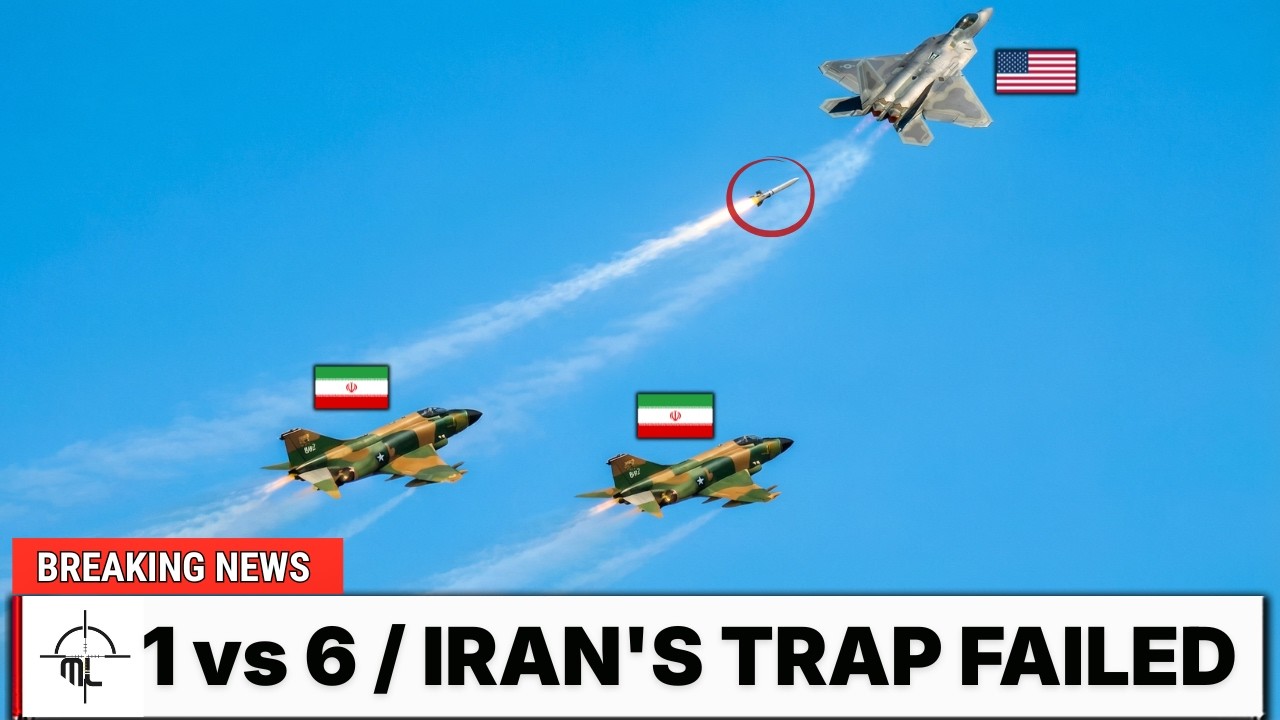
As the F-35 entered Iranian airspace, the response was swift. Six F-4 Phantoms scrambled to intercept the intruder, believing they had the upper hand. They achieved radar lock and fired a missile, confident in their ability to claim victory.
The Chase: A High-Stakes Engagement
The chase that ensued was nothing short of cinematic. The F-35, equipped with superior maneuverability and stealth technology, engaged in evasive maneuvers, all while the Iranian F-4s pursued relentlessly.
What followed was a classic example of asymmetric warfare, where the F-35’s technological advantages came into play. The U.S. pilot used the terrain and advanced avionics to evade the incoming missile, showcasing the effectiveness of modern air combat strategies.
As the F-4s closed in, the tension escalated. The Iranian pilots, trained and experienced, believed they were on the verge of a significant victory against U.S. forces. However, they were unaware of the true nature of the operation unfolding above them.
The Revelation: Intelligence Gathering in Action
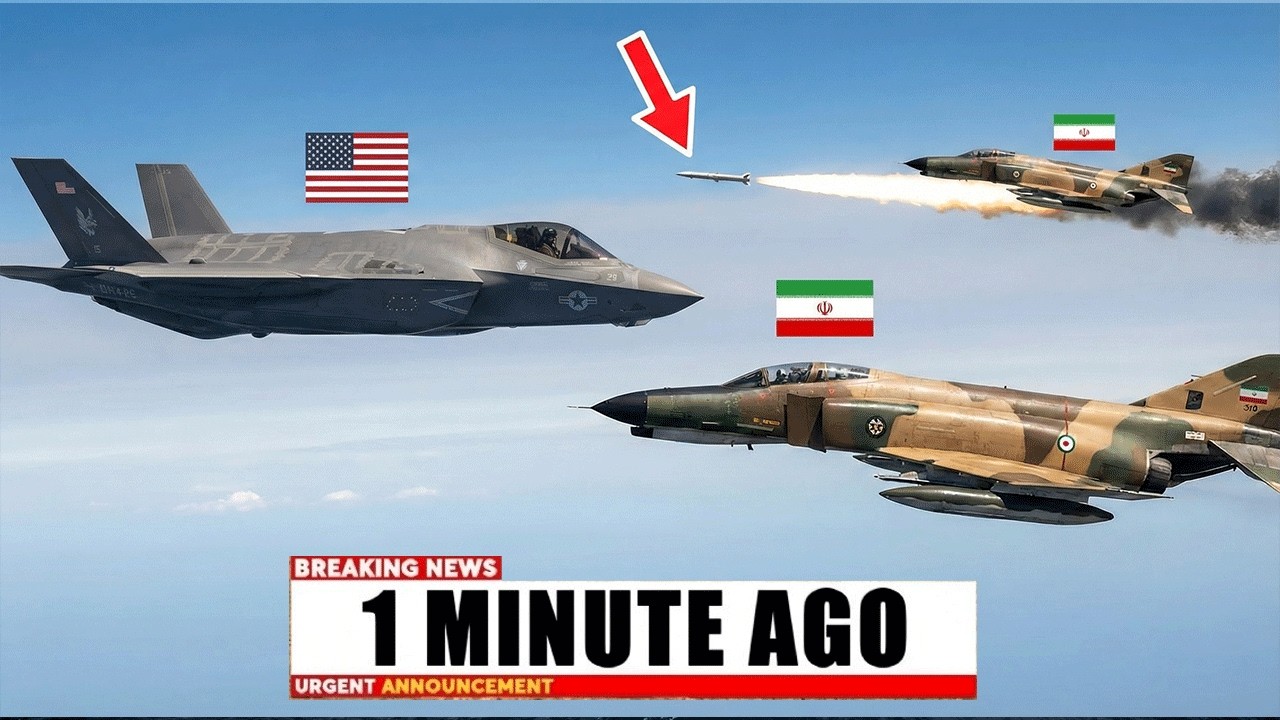
While the dogfight raged below, a reconnaissance aircraft, specifically the RC-135 Rivet Joint, was quietly documenting the entire encounter. This aircraft, equipped with sophisticated sensors, recorded every radar frequency, communication, and tactical maneuver executed by the Iranian forces.
The information gathered during this operation would prove invaluable. Analysts would later sift through the data to create a comprehensive picture of Iran’s air defense network, identifying capabilities that Tehran believed to be hidden from prying eyes.
This intelligence operation was not merely about the aerial engagement; it was a calculated move to fingerprint Iran’s complete air defense response. The U.S. military left the encounter with a treasure trove of information, allowing them to understand the strengths and weaknesses of Iranian defenses in unprecedented detail.
Iran’s Response: A Misunderstanding of Victory
In the aftermath of the engagement, Iranian state media celebrated what they perceived as a successful defense of their airspace. They reported on the F-4s’ ability to intercept and engage a U.S. fighter, framing the narrative as a triumph of Iranian military prowess.
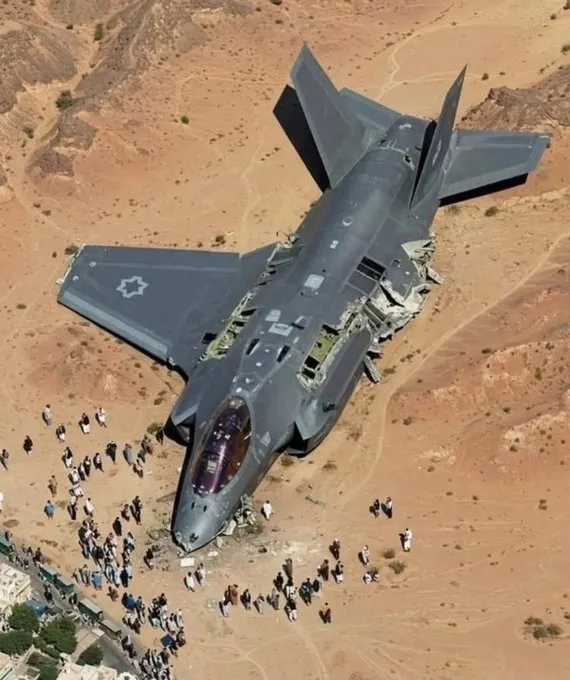
However, the reality was starkly different. While the Iranian pilots may have believed they had achieved a significant victory, the U.S. military walked away with crucial intelligence that would reshape the understanding of Iran’s military capabilities.
The disconnect between perception and reality highlights the complexities of modern warfare, where information warfare plays an equally critical role as traditional combat tactics. The Iranian leadership’s interpretation of the engagement underscores the challenges of ᴀssessing military encounters in real-time.
Lessons Learned: Implications for Future Engagements
This incident serves as a case study in the evolving nature of aerial combat and intelligence operations. It underscores the importance of technological superiority and the role of reconnaissance in modern military strategy.
The U.S. military’s ability to gather intelligence without direct engagement showcases the effectiveness of asymmetrical tactics in contemporary warfare. As nations continue to invest in advanced technologies, the dynamics of air combat will undoubtedly evolve.
Moreover, this encounter raises questions about the future of military engagements in the region. As tensions persist, both sides must navigate the delicate balance between deterrence and provocation, knowing that each encounter holds the potential for escalation.
Conclusion: A New Era of Warfare
The confrontation between six Iranian F-4s and a single U.S. F-35 is more than just a story of aerial combat; it represents a new era of warfare characterized by intelligence operations, technological advancements, and the complex interplay of military power.
As nations around the world continue to develop and refine their military capabilities, the lessons learned from this encounter will resonate for years to come. The importance of understanding and adapting to the evolving landscape of warfare cannot be overstated.
In the end, what seemed like a straightforward ambush turned into a multifaceted intelligence operation, leaving both nations to reᴀssess their strategies and capabilities in an increasingly complex global environment. The world watches closely as the implications of this encounter unfold, shaping the future of military engagements for years to come.