In the high-stakes theater of the White House Correspondents’ Dinner, the script was suddenly shredded by the sound of gunfire. As the Washington Hilton dissolved into a scene of frantic movement and panicked retreat, one figure remained eerily static: President Donald Trump. Now, as the dust settles on a harrowing assassination attempt, experts are weighing in on the President’s peculiar lack of a “fight or flight” response.
The evening took a violent turn on Saturday when Cole Tomas Allen reportedly breached security checkpoints, armed to the teeth with a shotgun, a handgun, and an array of knives. Following a brief but intense exchange of gunfire with law enforcement, Allen was neutralized and taken into custody. Sources close to the investigation have since told ABC News that early evidence points toward a chilling objective: a mass casualty event designed to target as many attendees as possible.
Related article Ex-Taliban Commander Admits Deadly Attacks and NYT Reporter Kidnapping in Chilling Court Confession
On Monday, the legal hammer fell. During an arraignment at the U.S. District Court in Washington, D.C., Allen was formally charged with the attempted assassination of President Donald Trump, along with the interstate transport of firearms and the discharge of a weapon during a violent crime.
The “Freeze” Before the Flight
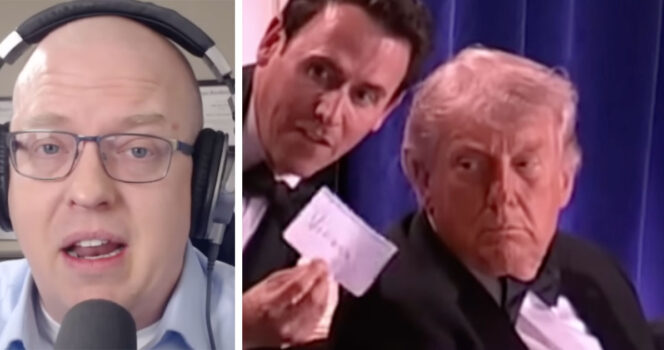
While the legal proceedings move forward, the public remains transfixed by video footage from the ballroom. As the first shots echoed through the Hilton, the contrast was jarring. While Cabinet members were rushed to secure locations and guests dove for cover beneath linen-draped tables, the President sat motionless.
Body language expert “Dr. G,” a prominent analyst with over 650,000 YouTube subscribers, suggests that what appeared to be iron-clad nerves might actually be a window into the human psyche.
Related article Woman hit 9-year-old in head with pot for doing dishes wrong, then broke his finger
“He looks indifferent, almost unimpressed by what’s going on around him,” Dr. G noted. “If you look at the three people that he’s surrounded by… we’re all seeing the freeze response… Freeze is the first step.”
According to the expert, the footage serves as a “textbook” demonstration of the immediate biological reaction to sudden, life-threatening danger. While the President and those in his immediate orbit initially exhibited this universal freeze, the divergence occurred as the reality of the threat set in.
A Different Interpretation of Danger
As the situation escalated, the people surrounding Trump transitioned into the “flight” phase. “You’ll notice that… they all leaned backward,” Dr. G observed. “Even though physically that’s not actually going to do anything, that’s part of the instinct.”
Yet, the Commander-in-Chief remained the outlier in the room. Throughout the scramble, Trump’s stoicism was so pronounced that it bordered on the surreal.
Related article Trump wanted to arrest 3,000 immigrants per day. He did not understand one very important thing.
“President Trump still does not seem to be particularly concerned about what’s going on. You’ll notice his facial expression doesn’t really change through any of this,” the expert concluded. The takeaway, according to Dr. G, points to a unique psychological makeup: “Part of what I think this says is that President Trump may interpret danger differently than other people.”
The incident leaves the nation grappling with two parallel stories: a near-catastrophic failure of security and a President whose reaction to mortality seems to operate on its own frequency.
What are your thoughts on this analysis? Do you believe the President’s reaction was a sign of composure or a different psychological processing of threat? Share your perspective in the comments below.