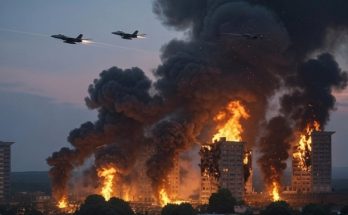
In the labyrinth of the Lake Chad Basin, where borders blur into water hyacinths and porous sandlines, a shadow war has been quiet for months. That silence shattered recently when a meticulously coordinated joint raid by American and Nigerian forces eliminated Abu-Bilal al-Minuki (also known as Abu Bakr al-Mainuki), a top-tier commander within the Islamic State’s West African apparatus.
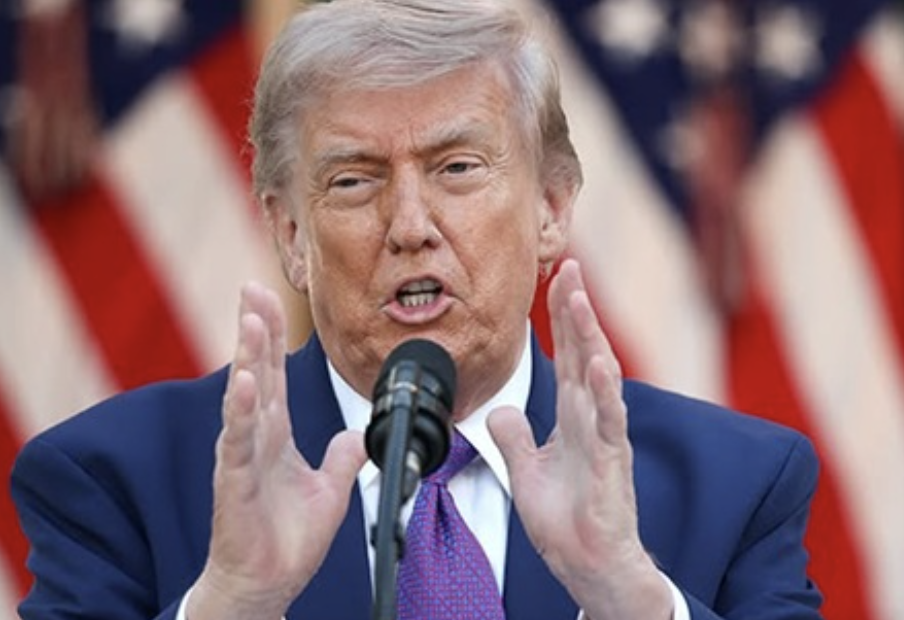
The announcement, delivered by President Donald Trump and later echoed by defense officials in Abuja, marks a major counterterrorism victory in a theater that has quietly become the global epicenter of jihadist expansion.
According to military sources, the high-stakes operation concluded with zero American or Nigerian casualties—a textbook execution of a mission built on months of deep-signal intelligence, aerial surveillance, and high-risk tactical coordination.
The Anatomy of a High-Value Target
Al-Minuki was not a minor player. Long blacklisted by Washington as a Specially Designated Global Terrorist, he was a vital cog in the machinery of ISIS-West Africa Province (ISWAP).
When the ISIS caliphate crumbled across Iraq and Syria years ago, the brand didn’t die; it migrated. The center of gravity shifted to the African continent, finding fertile ground in the Sahel and the Lake Chad Basin—a sprawling terrain shared by Nigeria, Chad, Niger, and Cameroon. Al-Minuki was instrumental in managing this transition, overseeing strategic planning, financing pipelines, and regional communication networks.
Related article NBC Host Sara Gore Announces Breast Cancer Diagnosis On Air: ‘If I Didn’t Say I Was Scared, I’d Be Lying’
Military analysts point out that eliminating a figure like al-Minuki does more than just remove a fighter from the battlefield:
Command Chaos: It fractures the immediate chain of command, forcing decentralized cells to scramble.
Logistical Asphyxiation: It disrupts the delicate financial networks used to fund cross-border operations.
Propaganda Deflation: It punctures the narrative of invincibility that these groups rely on for recruitment.
A Convergence of Intelligence
For more than a decade, Nigeria has battled a relentless insurgency, first ignited by Boko Haram and later complicated by the arrival of ISIS factions. The violence has displaced millions, devastated rural economies, and created a profound humanitarian crisis in the country’s northeast.
Historically, foreign intervention in the region has been a sensitive geopolitical tightrope. However, the sheer adaptability of these insurgent groups—who routinely exploit local grievances, economic hardship, and weak state presence to recruit—has forced a deeper level of international camaraderie.
Related article US state set to execute first woman in over 200 years – her horrific crime revealed
This latest raid highlights a significant evolution in the Washington-Abuja security alliance. What began years ago as basic logistical support has matured into a sophisticated partnership. The operation in the Basin relied on a seamless blend of Western technological prowess—specifically high-altitude surveillance and electronic intelligence—and the invaluable on-the-ground tactical execution of Nigerian forces who know the unforgiving terrain best.
The Fragile Reality of ‘Decapitation’ Strategies
While officials celebrate the precision of the strike, veteran conflict analysts urge a sober reading of the map. In the lexicon of modern warfare, “decapitation strikes”—the targeted killing of high-ranking insurgent leaders—are vital, but they are rarely a silver bullet.
The reality of modern militancy is that groups like ISIS are built to endure leadership vacuums. They adapt, appoint successors, shift their operational bases, and often launch retaliatory propaganda campaigns to prove they are still viable.
“Taking out a top commander buys you time and disrupts immediate plots,” says one regional security expert. “But long-term stability isn’t won solely with laser-guided precision or elite commandos. It requires filling the vacuum with governance, economic development, and community stabilization.”
The New Frontier of Global Terror
The global media reaction to the raid reflects the complex nature of the conflict. While some headlines focused purely on the tactical triumph, others looked at the broader geopolitical chess board. On social media, the discourse mirrored the usual modern split: praise for the military success intermingled with debates over foreign military footprints in Africa.
Related article Kesha Throws Champagne Bottle Mid-Performance, Hits Photographer
But beyond the noise of the news cycle lies an undeniable statistical truth: Africa has become the frontline. International security tracking reveals that a staggering percentage of recent global ISIS-related incidents are now concentrated in the Sahel and West Africa.
The joint operation that took down al-Minuki is a clear signal that international priorities are shifting to meet this threat. It proves that cross-border terrorism can be met with equally seamless cross-border intelligence. Yet, as the smoke clears over the Lake Chad Basin, the broader, hydra-headed conflict remains ongoing, requiring far more than a single successful night in the field.