Congress Moves to Block Any Trump Military Action on Greenland as Bipartisan Numbers Are Confirmed
Washington is moving swiftly to draw a hard constitutional line.
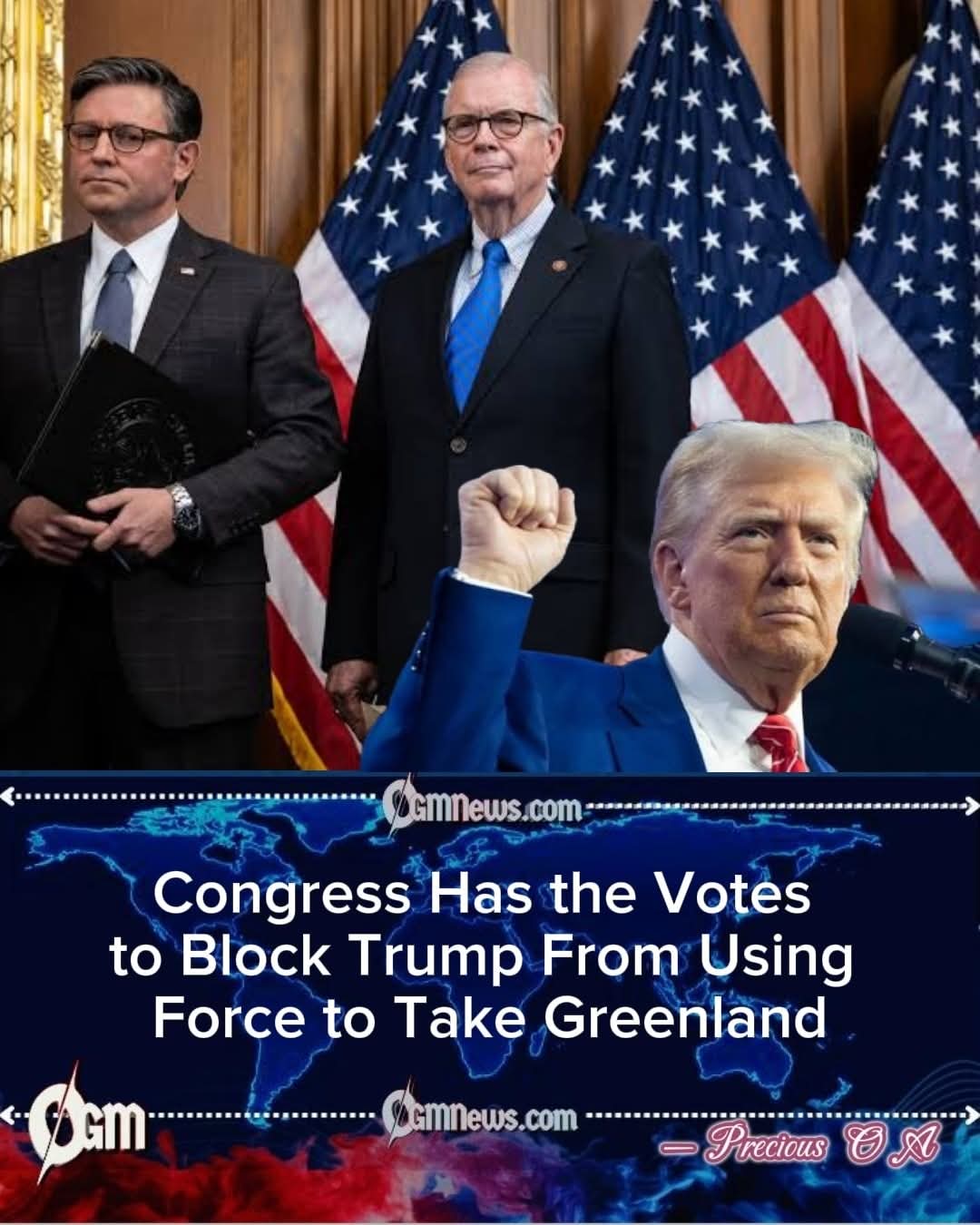
Lawmakers in both the U.S. House of Representatives and the Senate have now confirmed they possess the votes needed to pass legislation that would block President Donald Trump from using military force in any attempt to seize or assert control over Greenland. Congressional leaders say the move is both preventative and symbolic — a clear message that any territorial expansion or military action abroad must go through Congress, not the White House alone.
The development marks a rare moment of bipartisan alignment in a deeply polarized political climate, with lawmakers from both parties warning that unilateral military action would represent a dangerous escalation of executive power.
A Direct Response to Rising Concerns
Although no formal military order has been issued, the legislation is being framed as a preemptive safeguard. Several members of Congress say the goal is to ensure that speculation, rhetoric, or informal discussions around Greenland never translate into real-world military planning without legislative oversight.
“This is about the rule of law,” one senior lawmaker said. “The Constitution is very clear: Congress authorizes war, not the president acting alone.”
The bill would explicitly prohibit the use of U.S. military funds or forces for any operation intended to seize, occupy, or otherwise assert control over Greenland without clear and explicit congressional approval.
Why Greenland Matters
Greenland, an autonomous territory within the Kingdom of Denmark, holds enormous strategic and geopolitical value. Its location in the Arctic makes it critical for global shipping routes, military positioning, and access to natural resources as polar ice continues to melt.
The United States already maintains a military presence on the island through long-standing agreements with Denmark. However, any attempt to expand that presence through force would represent a dramatic break from international norms and risk destabilizing relations with NATO allies.
Lawmakers argue that even discussing military seizure crosses a dangerous line.
“This isn’t a real estate deal,” another congressional leader said. “This is foreign policy, international law, and global stability.”
Bipartisan Unity — A Rare Sight
Perhaps most striking is the breadth of support behind the legislation. Members across ideological lines say the issue transcends party politics.
Conservatives backing the bill emphasize constitutional limits on executive power, while progressives point to the risks of militarization and diplomatic fallout.
“This isn’t about who occupies the Oval Office,” one senator explained. “It’s about making sure no president — Democrat or Republican — can drag the country into an international crisis on a whim.”
The confirmation that both chambers have the necessary votes signals that the legislation is not symbolic. It is expected to pass if brought to the floor.
A Broader Warning on Presidential Power
Legal scholars say the move reflects growing anxiety in Congress about the expansion of presidential authority in foreign affairs, particularly when it comes to military decisions.
Over the past several decades, presidents from both parties have increasingly relied on executive authority to conduct operations abroad, often citing national security or emergency powers. Critics argue that Congress has been too willing to surrender its constitutional role.
“This is Congress attempting to reclaim ground it has slowly lost,” said one constitutional expert. “It’s a reminder that the separation of powers still matters.”
International Implications
Allies are watching closely.
Any suggestion of military action involving Greenland would immediately involve Denmark and raise concerns within NATO. Diplomatic analysts warn that even hypothetical threats can strain alliances and embolden adversaries.
“This kind of legislation sends reassurance to allies,” said a former State Department official. “It tells the world that U.S. foreign policy is governed by institutions, not impulses.”
What Happens Next
Congressional leaders say they are prepared to move quickly if necessary, though some hope the legislation itself will serve as a deterrent.
“The message is clear,” one House member said. “There will be no unilateral military action. Period.”
Whether the bill ultimately reaches the president’s desk remains to be seen, but one thing is certain: Congress is signaling that it will not sit quietly when it believes constitutional boundaries are at risk.
As tensions around executive power, foreign policy, and global influence continue to rise, this standoff may become a defining moment in how the United States balances leadership with restraint.