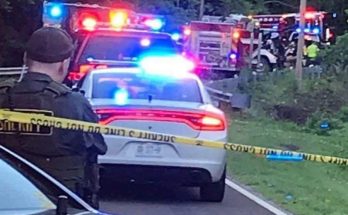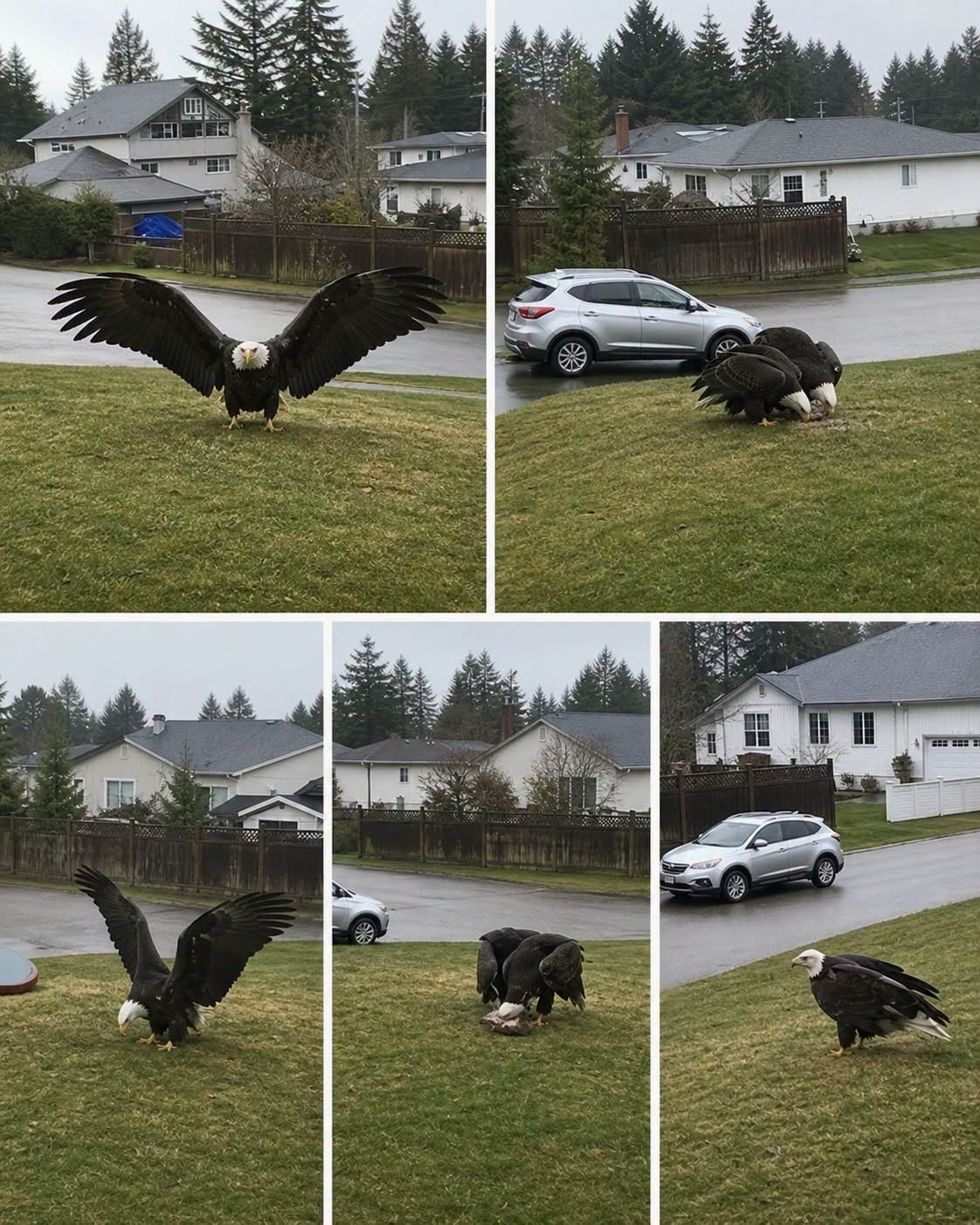
A photograph said to show a “massive eagle captured in Brownsville” has been paired with a story about a ten-foot raptor taken to a conservation center for genetic testing. The article describes scientists, secret habitats and plans for ecotourism, but it provides no named institution, researcher, specimen record or official wildlife announcement. The claim reads like fiction built around a manipulated or misleading image.
Brownsville, Texas, sits within a biologically rich region near the Gulf of Mexico and the Mexican border. Its wetlands and migration routes attract remarkable birds, including raptors. That real biodiversity makes the setting believable. A previously unknown eagle with an extraordinary wingspan, however, would trigger extensive scientific documentation and immediate attention from wildlife agencies and ornithologists.
Large eagles do exist. The harpy eagle of Central and South America can appear enormous because of its powerful body and broad wings. The Philippine eagle is among the longest living eagles, while Steller’s sea eagle is exceptionally heavy. Golden and bald eagles in North America can have wingspans exceeding six feet. Perspective can make any of these birds look much larger when photographed close to a camera.
A ten-foot wingspan would be unusual even among the largest eagles. It is not impossible for every individual measurement to vary, but an unknown population of giant raptors living near a populated and heavily observed border region would be difficult to conceal. Birds leave feathers, nests, prey remains, recordings and repeated sightings. One dramatic capture photo is not enough.
Digital images can be altered in several ways. A normal bird may be positioned close to the lens while people stand farther away, creating forced perspective. Editing software can enlarge the animal or combine elements from separate photographs. Generative image systems can create entirely fictional scenes, though errors in feathers, hands, cages and shadows sometimes reveal the process.
Readers can check a wildlife discovery by looking for a scientific name, location, date and named experts. Major finds are usually reported by a university, museum, conservation organization or government agency. Researchers describe how measurements were taken and often publish photographs from several angles. A story that says only “scientists are stunned” without identifying a scientist provides no accountable source.
The linked tale also claims blood tests and genome sequencing are underway. Such work would require permits, animal-care protocols and laboratories. A legitimate conservation center would likely explain why the bird was captured, how stress was minimized and whether release was planned. Silence about welfare is another sign that the narrative prioritizes spectacle over biology.
False animal discoveries can create real harm. They may encourage people to approach nests, harass wildlife or travel onto protected land. They can also distract from genuine conservation problems facing large raptors, including habitat loss, poisoning, power-line collisions and illegal hunting.
The photograph can still inspire curiosity. Instead of asking whether a prehistoric eagle has been hidden in Texas, readers can learn which raptors migrate through the Rio Grande Valley and how conservationists identify them. The authentic birds are impressive without digital enlargement.
No credible evidence in the linked story establishes the capture of a new giant eagle in Brownsville. Until a named wildlife authority provides records, the responsible conclusion is that the image is staged, altered or taken out of context. Wonder does not need to disappear, but it should be guided by evidence rather than a caption designed to make disbelief feel like discovery.
If a large unfamiliar bird is seen, observe from a distance and record the location, time and photographs without chasing it. Local birding groups or wildlife agencies can help identify the species. That approach converts surprise into useful information while protecting both the observer and the animal.