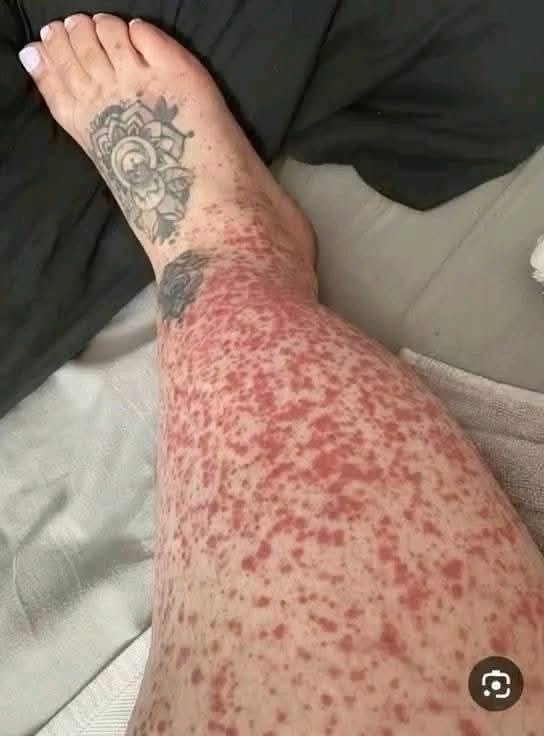
A photograph showing a lower leg covered with red and purple spots has circulated with a vague warning about “the consequences of sleeping with” something. The wording is designed to create curiosity, but an image alone cannot establish a cause. Similar-looking spots may result from irritation, inflammation, infection, medication effects, bleeding beneath the skin or several other conditions.
Tiny pinpoint spots caused by bleeding under the skin are called petechiae. Larger reddish-purple areas may be described as purpura. Unlike many ordinary rashes, these marks may not fade when pressed because the color comes from blood outside small vessels rather than temporary widening of vessels near the surface.
Petechiae can appear after a minor strain, such as intense coughing or vomiting, especially around the face. They can also occur when platelet levels are low, when blood clotting is impaired or when small blood vessels become inflamed. Some infections and medications produce similar patterns. The range extends from self-limited causes to emergencies, which is why context matters.
Vasculitis is a broad term for inflammation of blood vessels. When it affects vessels in the skin, it can cause palpable purple spots, pain, swelling or itching. Some forms are limited to the skin, while others involve joints, kidneys or other organs. A clinician may need blood tests, urine tests or occasionally a skin biopsy to identify the pattern.
Low platelets can make bleeding easier. A person may notice new bruises, nosebleeds, bleeding gums or prolonged bleeding along with spots. Platelet changes can have many causes, including illness and medication. They cannot be diagnosed by counting marks in a photograph.
Urgent medical assessment is important when a non-blanching rash appears with fever, severe illness, confusion, difficulty breathing, neck stiffness, uncontrolled bleeding or rapid spread. A person who is pregnant, immunocompromised or taking blood-thinning medication should have a lower threshold for seeking advice. In a true emergency, call local emergency services.
For a mild isolated rash, useful details include when it began, whether it itches or hurts, recent illness, new medicine, travel, insect exposure and contact with unfamiliar products. Photographs taken in consistent light can document changes. Avoid scratching, applying harsh chemicals or taking someone else’s medication while waiting for professional guidance.
The phrase “sleeping with” may encourage viewers to blame bedding, pets or a partner without evidence. Bedbugs and other insects can cause itchy bites, often in clusters, but bites do not explain every purple spot. Allergic contact reactions usually look and feel different from bleeding under the skin. Accurate identification may require examining the room, the skin and the person’s overall health.
Treatment depends entirely on the cause. An allergic reaction, bacterial infection, platelet disorder and vasculitis do not share one remedy. Advice that treats every photograph with an antibiotic, steroid or home mixture can delay the correct care and create new problems.
The responsible message behind the alarming image is not that sleep has a hidden consequence. It is that widespread red or purple spots deserve attention, particularly when they do not blanch or appear with other symptoms. Online photos can raise awareness, but a medical history and examination are what turn a visual pattern into a diagnosis.
When checking whether a mark blanches, people should press gently through a clear glass only if doing so causes no pain, and the result still cannot diagnose the cause. A non-blanching rash with fever is especially concerning. If uncertainty remains, describing the appearance to a clinician is safer than waiting for social-media comments to agree.
Bring a current medication list and note recent illnesses to the appointment. Those practical details may be more diagnostically useful than the viral image that first caused concern.