The lights inside the arena were blinding, the kind that flatten reality and turn every movement into a moment meant to be replayed, slowed down, and dissected online within seconds.
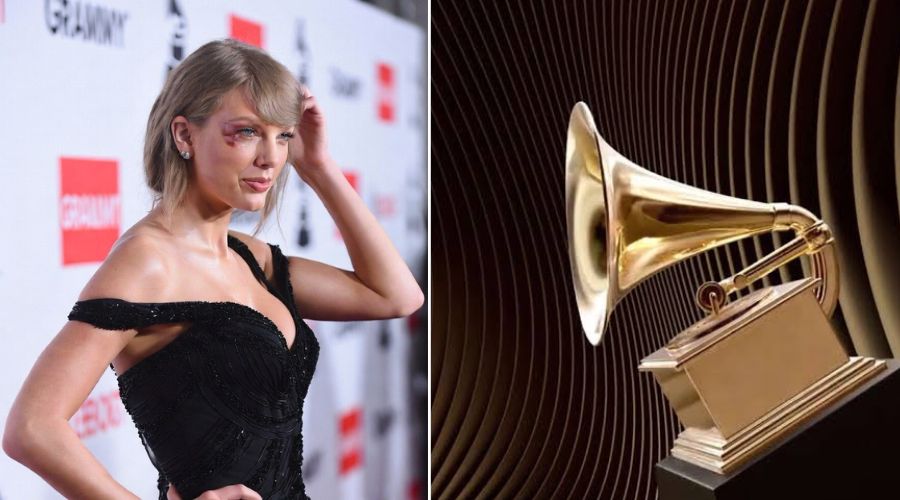
When Taylor Swift stepped onto the red carpet at the Grammys, the crowd did what it always does when she appears—cheers, camera flashes, breathless commentary. But this time, something felt different. Not loud. Not obvious. Just… off.
It took only a heartbeat.
A faint mark on her face. Thin. Unmistakable. A scar.
At first, many missed it. Taylor smiled the same practiced smile, posed with the same ease, wore confidence like a second skin. But as photos began circulating, zoomed in and enhanced, timelines exploded. Fans paused, scrolled back, and looked again. Was that really a scar on her face?
And if it was… why?
Within minutes, the Grammys stopped being about awards and performances and became something else entirely. Screens filled with side-by-side images, slow-motion carpet videos, and speculative captions written in all caps. Some called it bold fashion. Others called it unsettling. A few went further, asking questions no one expected to be asking on music’s biggest night.

Taylor Swift is no stranger to symbolism. Every era, every look, every detail is often intentional—sometimes revealed immediately, sometimes explained years later in lyrics or interviews. Fans know this. Which is why the scar didn’t feel accidental. It felt placed. Measured. Like a message waiting to be decoded.
Was it makeup? A prosthetic? A statement piece more powerful than any dress or jewelry?
Fashion critics were split. Some praised the choice as daring, suggesting it challenged beauty standards and forced viewers to confront their discomfort with imperfection. Others weren’t convinced. The placement looked too real. Too subtle to be theatrical, too visible to be ignored. And Taylor herself? She said nothing. No clarification. No playful explanation. Just silence.
That silence made the moment heavier.
As the night went on, the scar remained. It didn’t disappear under different lighting. It didn’t vanish in candid shots. Every new angle fueled the conversation further. Fans who had followed Taylor’s journey from country ingénue to global icon began tracing emotional timelines.

Lyrics about wounds. About battles. About scars that never fully heal. Was this visual storytelling? Or something more personal bleeding into public view?
Social media did what it always does when unanswered questions meet obsession.
Theories multiplied. Some suggested it was part of an upcoming project, a visual hint at a darker, more raw era. Others whispered about stress, pressure, and the invisible toll of fame.
A few went too far, spinning narratives with no evidence at all. But beneath the noise, one thing was clear: people were unsettled because they didn’t know how to categorize what they were seeing.
A scar doesn’t behave like fashion. It doesn’t sparkle. It doesn’t shout. It lingers.
And maybe that was the point.
In a world obsessed with perfection—especially when it comes to women in the spotlight—a scar forces attention in a different way. It disrupts the fantasy. It reminds viewers that behind the styling teams and choreography is a real human being, carrying stories no camera ever fully captures.
Still, questions remain unanswered. Taylor accepted awards, interacted with peers, and delivered the polished presence expected of her. Yet the mark stayed, quiet and unaddressed, as if daring people to sit with their discomfort rather than rush to conclusions.
Maybe it was fashion. Maybe it was art. Maybe it was a metaphor only Taylor understands for now. Or maybe it was simply a reminder that not everything worn on a red carpet is meant to be decorative.
Sometimes, it’s meant to be felt.
And as photos continue to circulate and fans wait for answers that may never come, one thing is certain: long after the Grammys trophies are shelved, that single detail will linger in memory—quiet, unsettling, and impossible to ignore.